



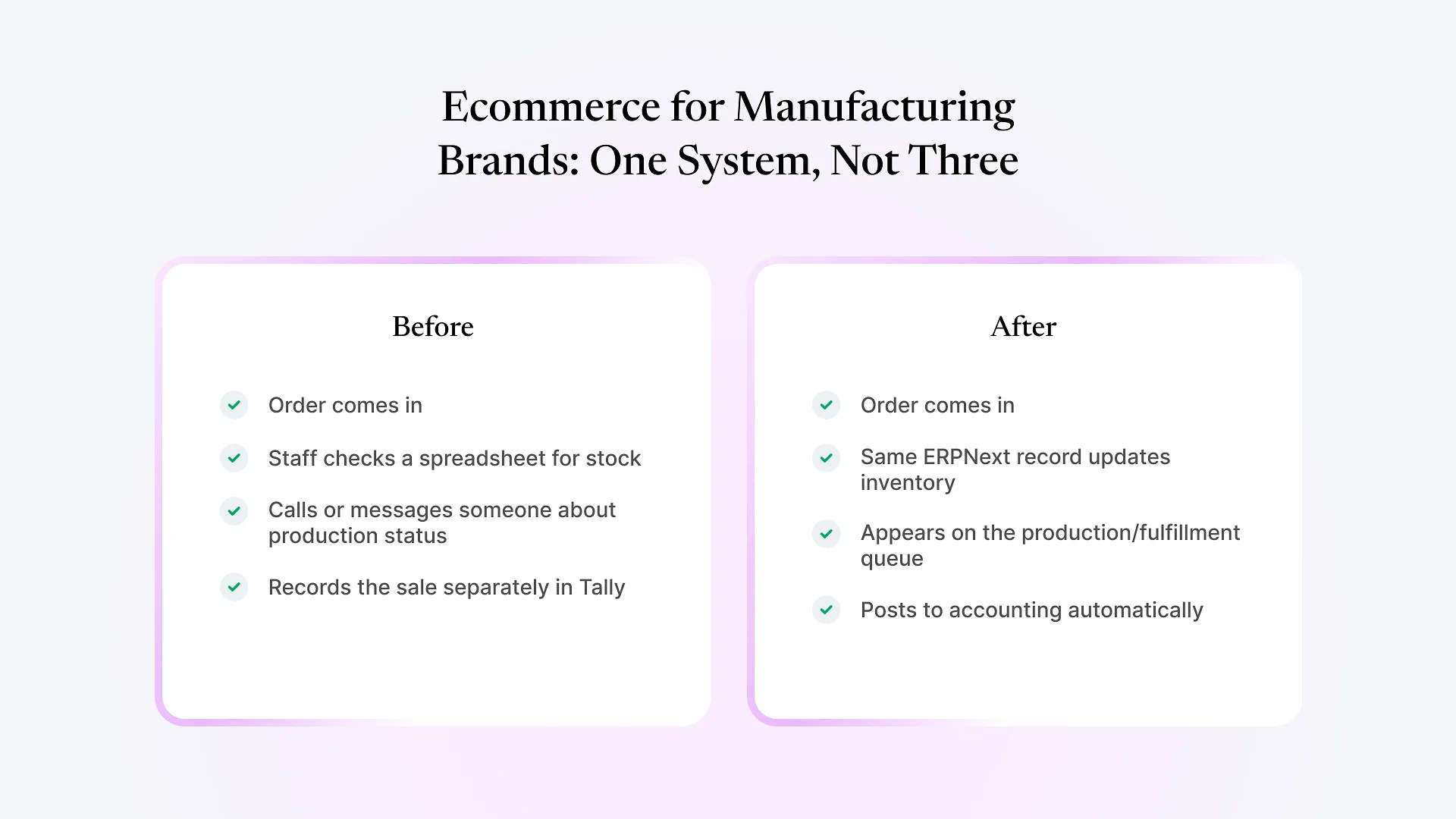
Most advice on ecommerce for manufacturing brands focuses on the storefront — which platform to build on, how to handle checkout, how to market the product. It skips the harder problem: what happens the moment an order is placed, when it has to trigger inventory checks, a production or picking decision, and a fulfillment step, often across systems that don’t talk to each other.
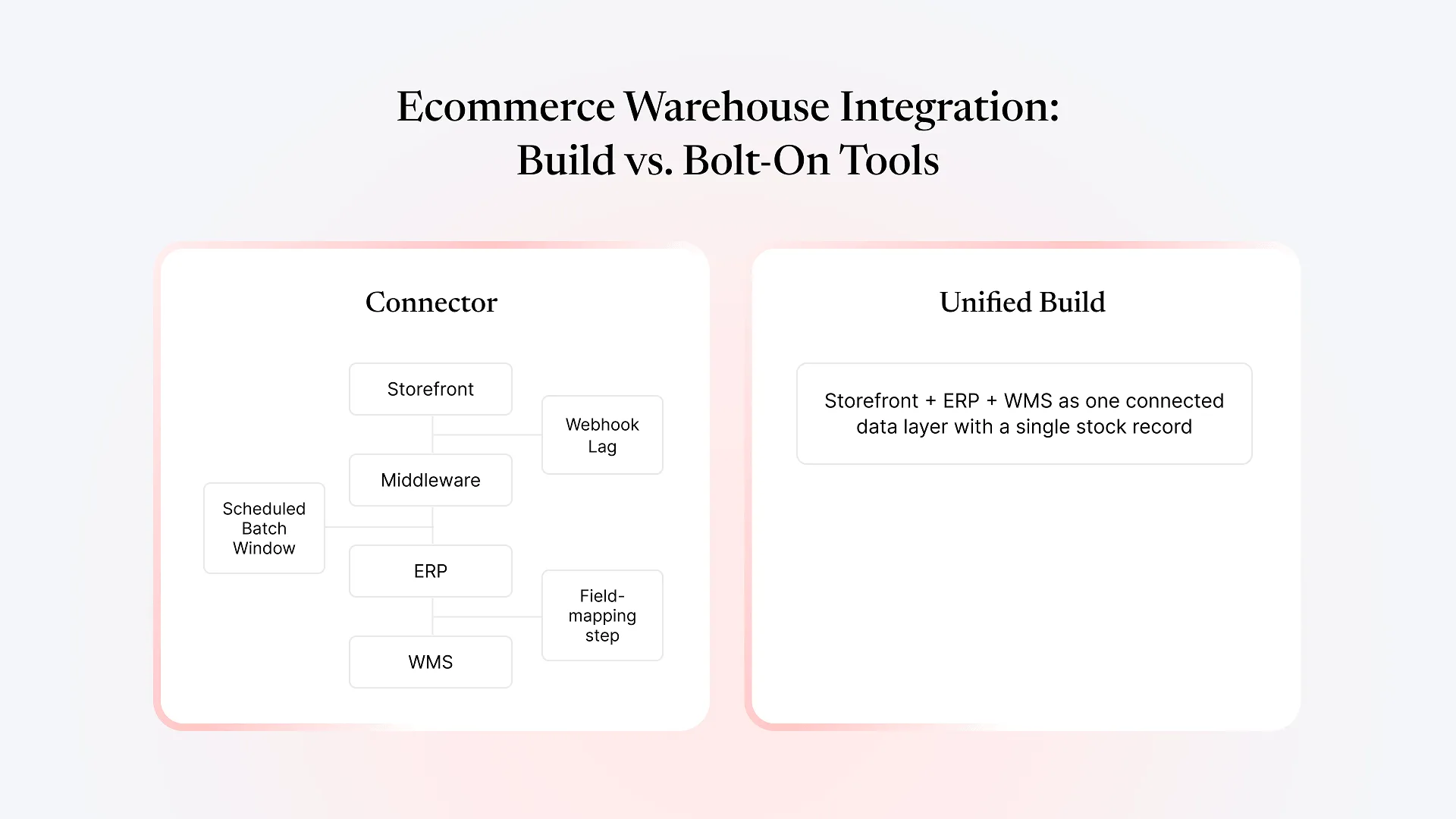
Ecommerce for manufacturing brands works best when the storefront, inventory, production, and order fulfillment run on one connected system instead of separate tools stitched together after the fact. That’s the difference between an order simply appearing on a screen and an order actually moving through your business without someone manually re-entering it three times.
This is what that looked like for one D2C manufacturing brand Aavatto worked with, and why the gap between “we have a website” and “we have a system” matters more than most ecommerce guides admit.
The Problem: Three Systems, One Order, No Single Source of Truth
Before the rebuild, the brand’s operations ran across disconnected spreadsheets and Tally for accounting, with no shared system linking what the storefront showed, what production had scheduled, and what inventory actually had on hand. Every order meant checking stock in one place, confirming it with someone who knew the production schedule, and recording the sale somewhere else entirely for accounting.
That gap is exactly what generic D2C order management software doesn’t address: your “available stock” as a manufacturer isn’t a static number sitting in a warehouse. It’s tied to what’s currently in production, what raw materials are on hand, and what’s already been promised to another order. A tool built only to manage a storefront’s checkout flow has no way to represent that.
The result, in this case, was slow order processing, inventory numbers nobody fully trusted, and a growing amount of manual reconciliation work just to keep the three systems roughly aligned with each other.
What Aavatto Built: One ERPNext System Covering the Full Order Path
Rather than adding another point tool to the existing patchwork, Aavatto implemented a unified ERPNext system spanning manufacturing, inventory, sales, procurement, and order fulfillment — replacing the disconnected spreadsheets and Tally setup with one platform where an order placed online is the same record a production planner and a warehouse team see, in real time.
That matters specifically for D2C order management software in a manufacturing context: an order doesn’t just need to be captured, it needs to trigger the right downstream action — check stock, flag a production run, or route to fulfillment — without a person manually bridging the gap between systems that were never designed to share data.
The Results
32% faster order processing — from order placement to the point it's actionable by production or fulfillment
99.2% inventory accuracy — a level that's only realistic when stock, production, and sales share one data source instead of three
55% reduction in manual work — largely the reconciliation and re-entry that previously ate into the operations team's time
10-week implementation timeline — specific to this project's scope; a business with more locations, integrations, or legacy data to migrate should expect a different timeline, not assume this one as a default
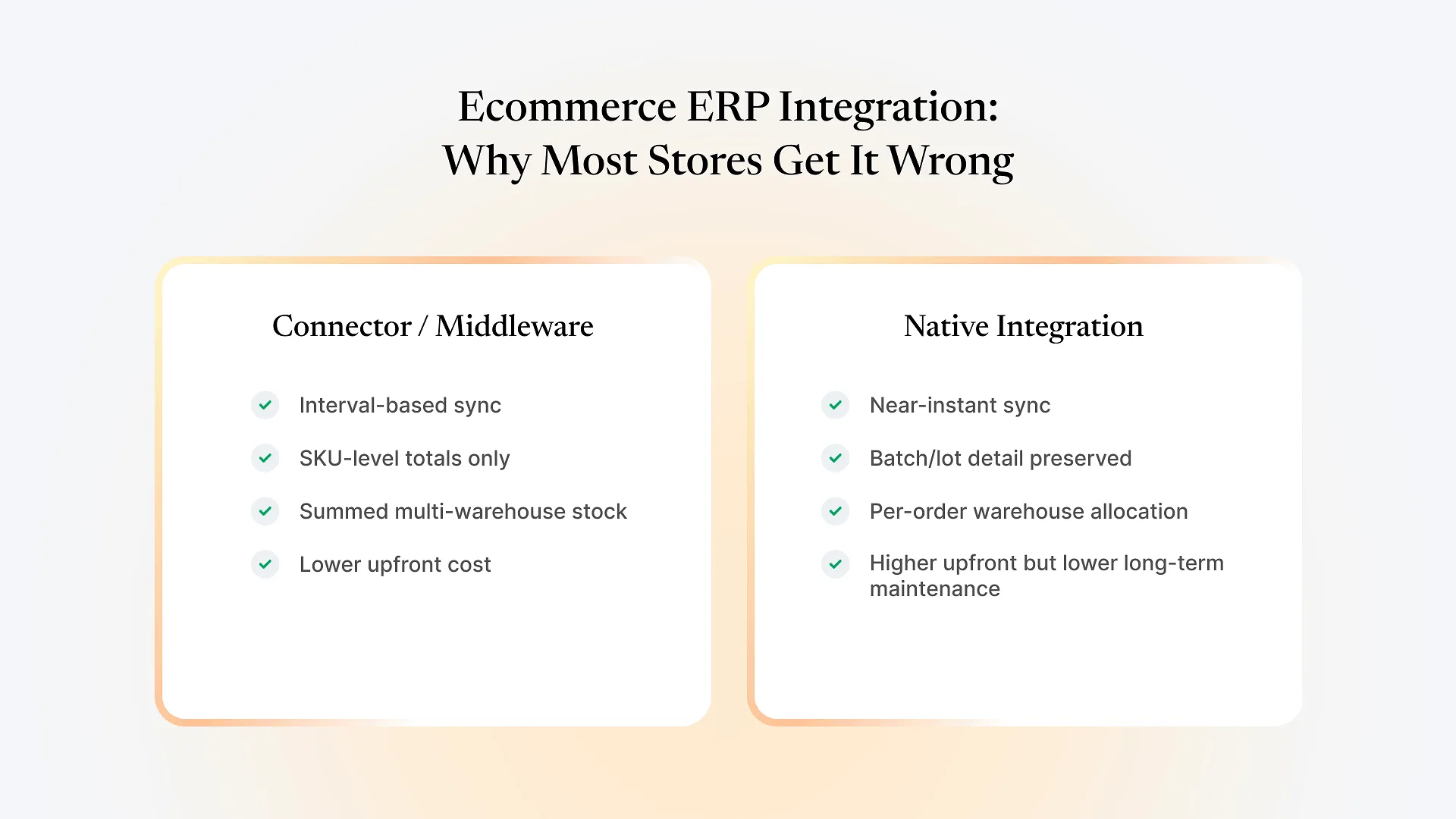
The inventory accuracy figure is worth sitting with. Most ecommerce-for-manufacturers advice treats “sync your stock” as a checkbox, similar to how batch and expiry tracking works for FMCG distribution — the number only holds up if production, procurement, and sales are genuinely reading from the same record rather than three approximations of it.
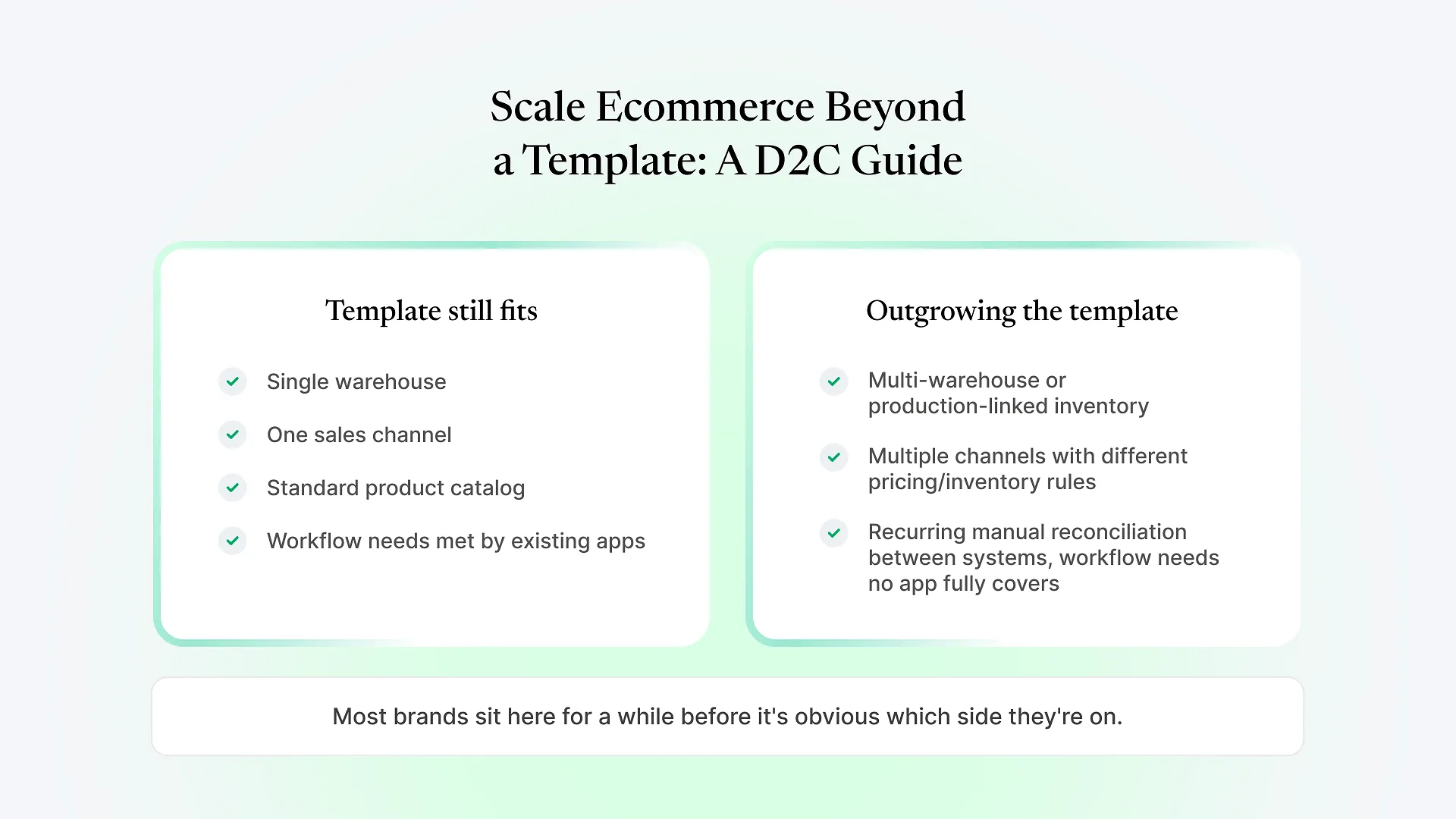
Weighing whether a similar setup fits your own order volume and production model? Talk to us about your e-commerce build — the right architecture depends on your specific catalog and fulfillment pattern, not a generic template.
Why This Isn't Just an IT Project
The 55% drop in manual work didn’t come from automating the storefront — it came from removing the reconciliation work that existed only because three systems needed to be manually kept in sync. That’s a pattern that shows up beyond order management too: teams see the same kind of manual-work reduction once self-service tools replace back-and-forth requests for routine tasks, because the underlying cause — a process that depends on someone manually bridging two systems — is the same one.
For a founder or ops lead evaluating this, the real question isn’t “do we need a better website.” It’s whether your current setup can tell you, accurately, what’s in stock, what’s in production, and what’s been sold — at the same moment, without someone checking three places first. If the answer is no, the fix usually isn’t a storefront upgrade. It’s connecting the systems behind it.