



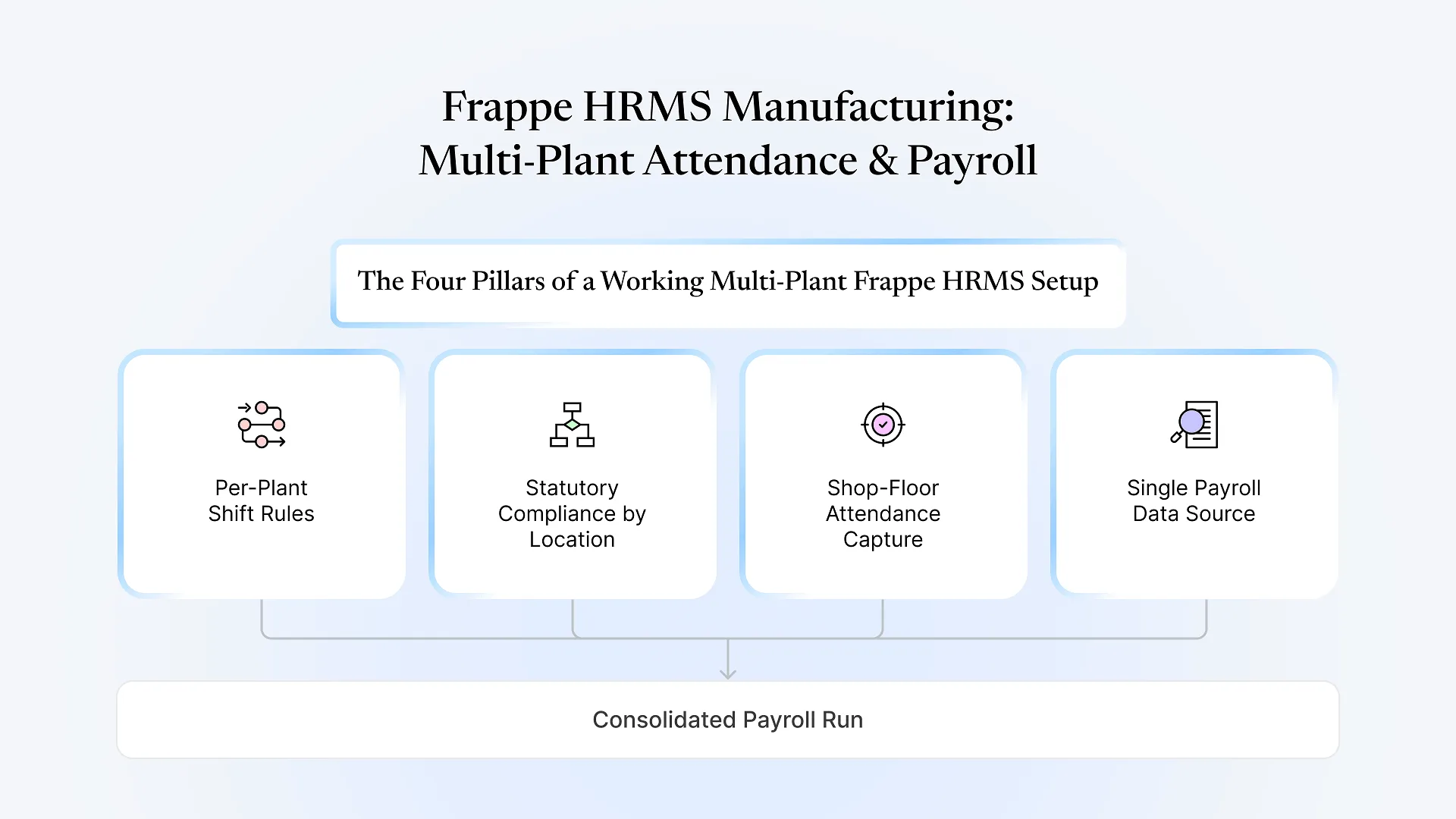
A Frappe HRMS manufacturing deployment done properly lets a multi-plant business run different shift and attendance rules at each location while still consolidating payroll into one view for a central HR or finance team — instead of each plant tracking hours separately and reconciling everything by hand at month-end. That’s the specific problem this article works through, not generic HR software features.
If you’re an HR or operations leader responsible for more than one manufacturing site, you’ve probably already lived the alternative: attendance logged differently at every plant, payroll assembled from spreadsheets that don’t quite match, and a compliance deadline that depends on someone manually cross-checking numbers across locations.
Why Standard HRMS Setups Break Down Across Multiple Plants
Most HR software handles a single site well. The trouble starts when a manufacturer runs two, three, or more plants, each with its own shift patterns, seasonal headcount swings, and often its own state-level statutory requirements. A generic single-location HRMS configuration either forces every plant onto identical rules that don’t reflect how each site actually operates, or leaves each plant running its own disconnected process that someone has to stitch together centrally.
Manufacturing adds a second layer most office-based HR software isn’t built for: attendance capture has to work for a shop-floor or production workforce, not just staff logging in from a desktop, and production volume tied to demand often means shift rosters and overtime shift more often than a stable back-office schedule would.
What Frappe HRMS Manufacturing Deployments Actually Need to Solve
Per-plant shift and attendance rules that still roll up centrally
Each location needs its own shift patterns and attendance logic, but a central team still needs one payroll run to review, not five disconnected ones.
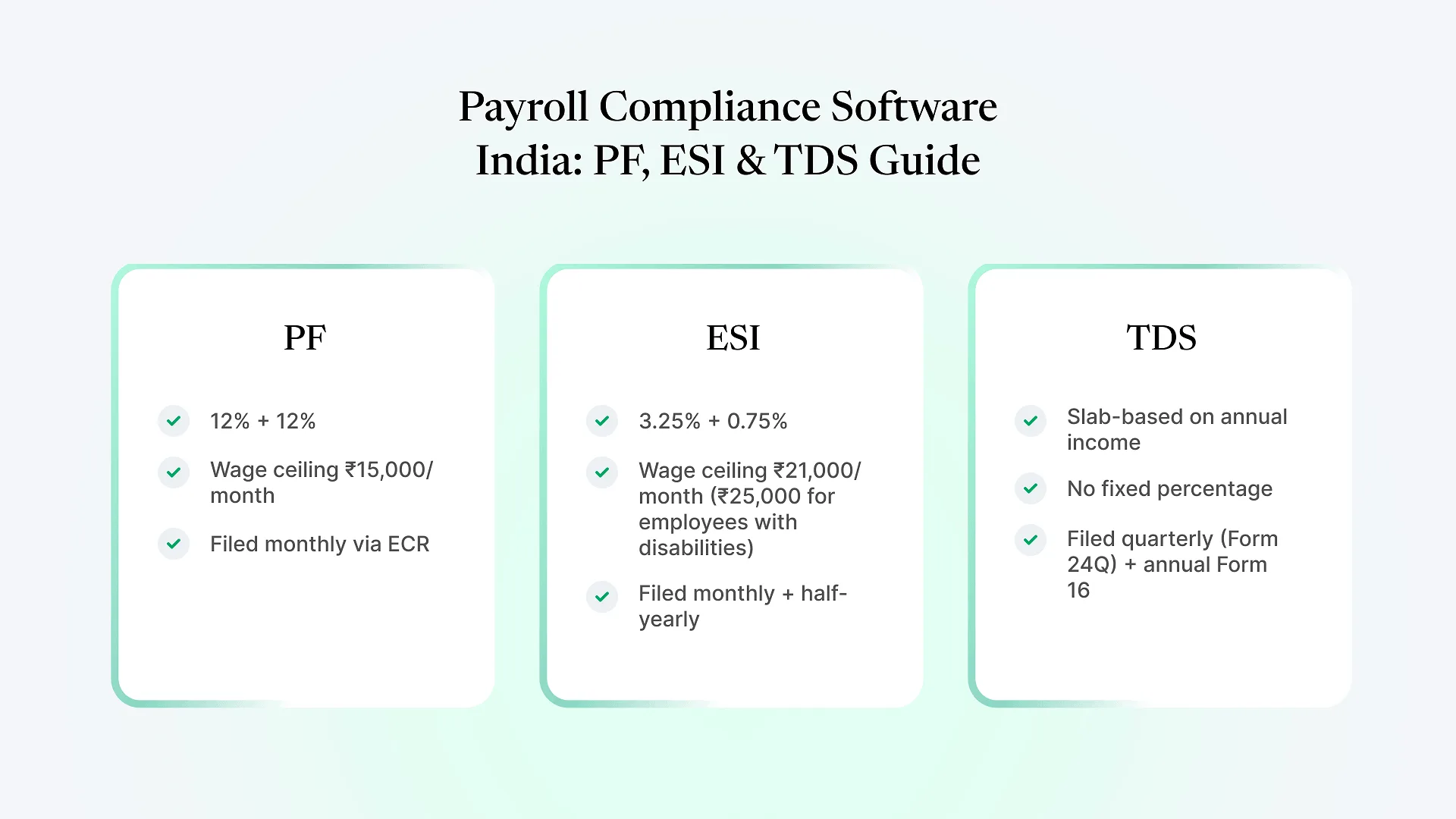
Statutory compliance applied per employee, per location
Requirements like PF, ESI, professional tax, and overtime rules can vary by state, and reconciling that manually across plants each month is where compliance risk tends to build up quietly.
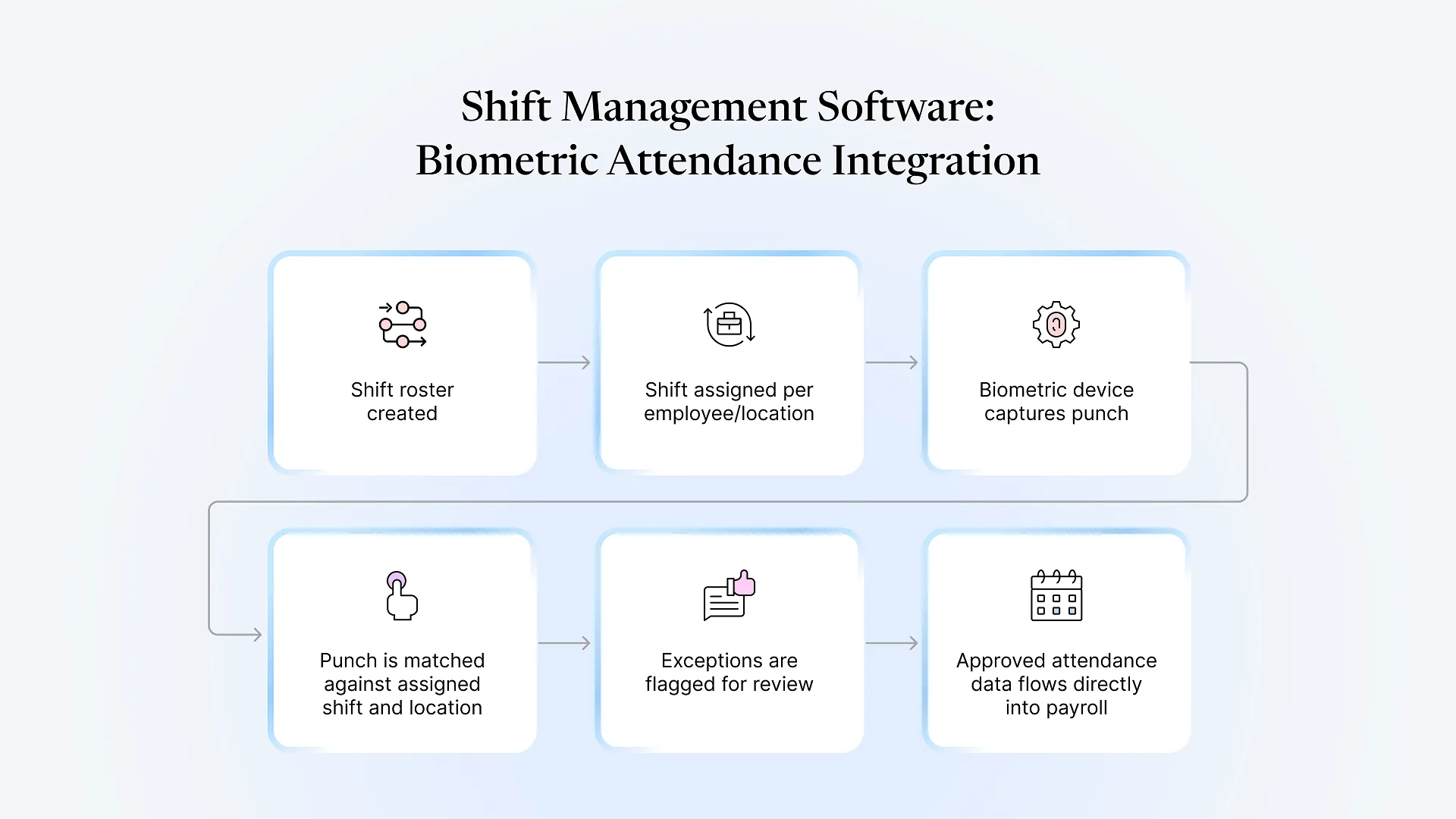
Attendance capture that fits the shop floor
Whatever the system replaces — paper registers, spreadsheets, or a basic biometric device — the new capture method has to work for a production workforce without disrupting the line.
A single source of truth feeding payroll
Attendance data needs to flow directly into payroll calculation rather than being re-entered, since manual re-entry is typically where errors get introduced in the first place.
Already know your plants need different rules but can’t picture how that consolidates centrally? See our HRMS implementation approach for how that configuration actually gets structured.
A Real Example: What This Looked Like for a Multi-Plant Manufacturer
This isn’t theoretical. A multi-plant ice cream manufacturer in Gujarat was managing shifts, attendance, and payroll manually across its production locations before working with Aavatto — a pattern that created both inefficiencies and compliance challenges as the business grew. Aavatto implemented a customized ERPNext/Frappe HRMS deployment to automate workforce operations across all of the manufacturer’s plants, resulting in zero-error attendance processing and automated payroll.
That “zero-error” outcome is worth being precise about rather than treating as a slogan: it reflects the removal of the manual re-entry step that was the original source of attendance mistakes, not a claim that no data-entry error is possible anywhere in the system. The read the full breakdown of the frappe HRMS FMCG case study covering that ice cream manufacturer, including the specific problem, the implementation, and the outcome in more detail.
Ice cream production has its own seasonality — output ramps sharply in summer, which pushes shift and headcount changes more often than a stable operation would see. That’s a useful stress test for whether a Frappe HRMS setup genuinely handles variable, multi-plant conditions, rather than just working under ideal, static ones.
Evaluating Frappe HRMS for Your Own Multi-Plant Operation
Frequently Asked Questions
See What This Would Take for Your Plants
If attendance and payroll across your plants still depend on manual reconciliation at month-end, that’s the same starting point the ice cream manufacturer in this article was working from before automating it. See our HRMS implementation approach to understand how a multi-plant Frappe HRMS deployment gets scoped and built for a manufacturing operation like yours.