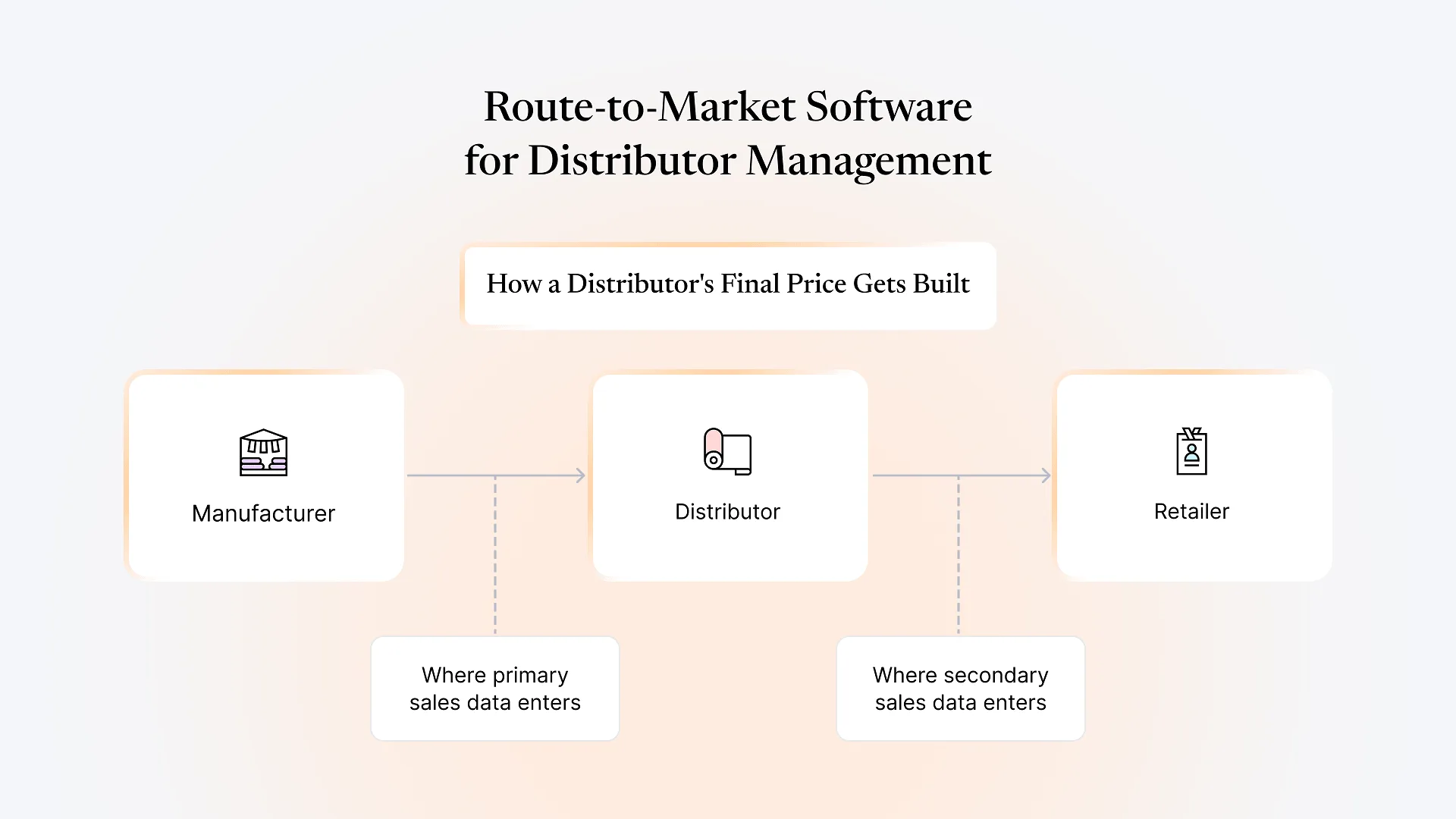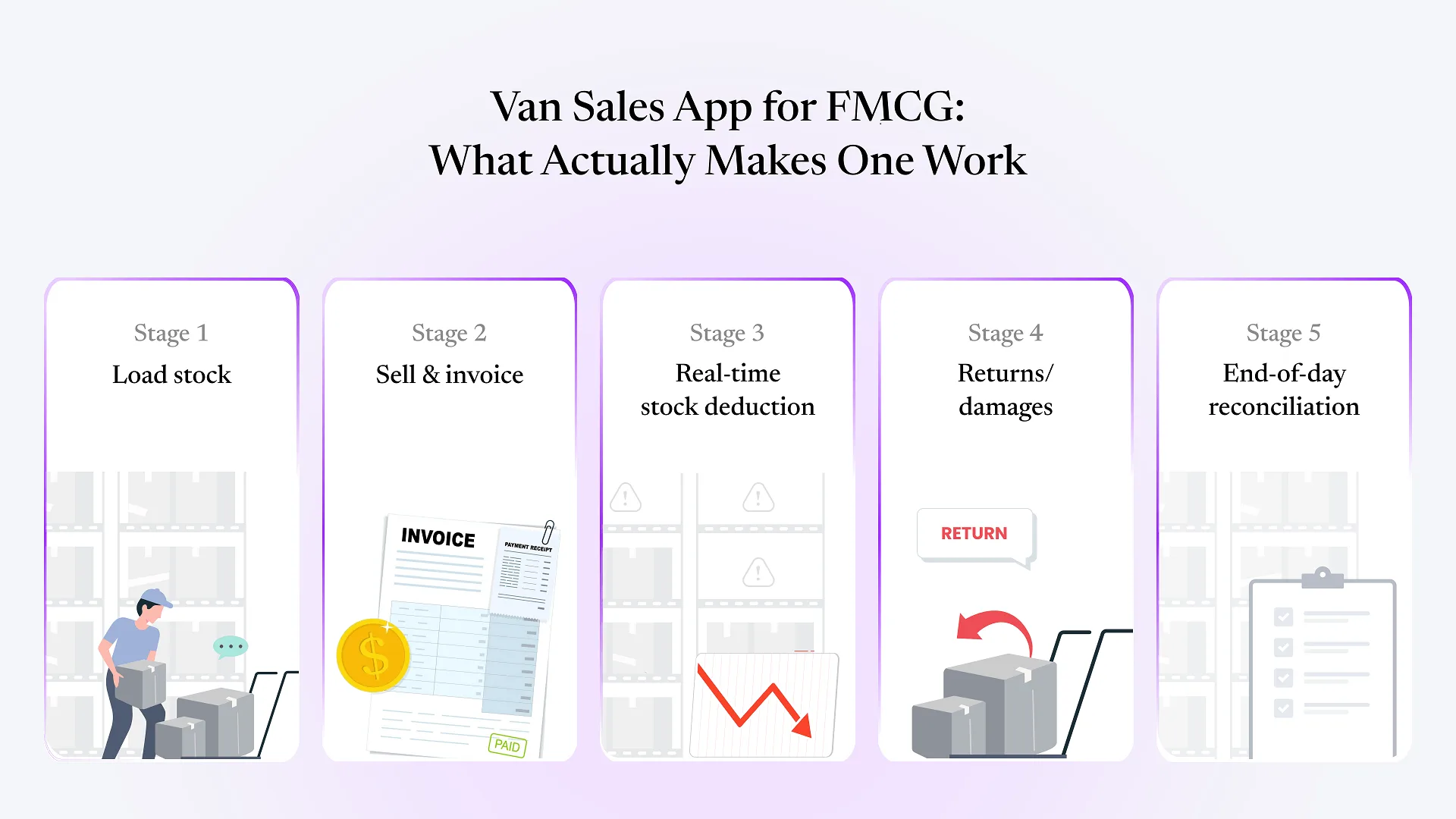




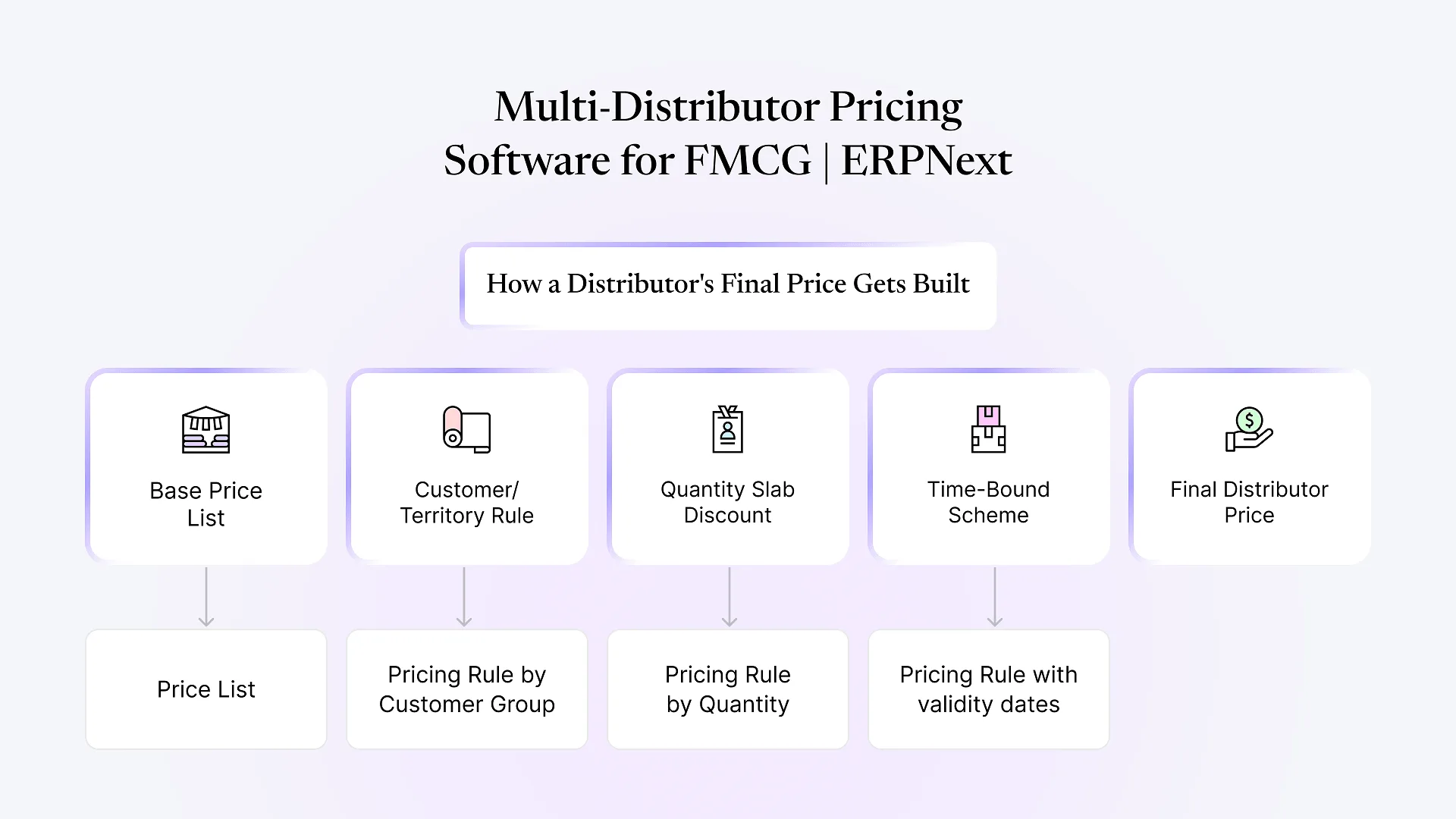
Multi distributor pricing software works by layering rules — customer tier, order quantity, product group, and scheme period — on top of a base price list, then resolving which rule applies when more than one qualifies. Done well, a sales order or invoice shows the correct distributor price automatically. Done badly, it turns into a spreadsheet of exceptions that nobody fully trusts, including the person maintaining it.
That gap between “we have pricing rules” and “our pricing rules actually hold up” is where most FMCG manufacturers and distributors run into trouble — not in the concept of slab pricing itself, which every distribution business already understands, but in the software layer meant to enforce it consistently across dozens or hundreds of distributor accounts.
Why Distributor Pricing Breaks Before It Reaches the Invoice
Most FMCG businesses don’t lack a pricing policy. They have one — often a detailed one, worked out over years of negotiation with distributor tiers, regional variations, and seasonal schemes. What they lack is a system that applies that policy the same way every time.
The typical failure pattern looks like this: a distributor is meant to get a 4% slab discount above a certain order volume, plus a seasonal scheme discount that month, minus a deduction for an unmet display commitment. If that logic lives in a spreadsheet or in a sales executive’s memory, it gets applied inconsistently — sometimes generously, sometimes not at all, and almost never in a way finance can reconstruct later when a distributor disputes an invoice.
This is also where margin actually leaks. Not through big pricing mistakes, but through small, repeated inconsistencies that never show up as a single line item — a scheme applied twice, a slab discount given at the wrong quantity break, a distributor quietly given “last time’s rate” because nobody checked the current one.
How ERPNext Structures Multi-Distributor Pricing Software Rules
Price Lists hold the base selling price per item, and a business can run separate price lists for different distributor tiers, regions, or channels (modern trade versus general trade, for instance).
Pricing Rules sit on top of price lists and apply conditional adjustments — a percentage or flat discount triggered by customer, customer group, territory, item group, quantity break, or a validity date range for time-bound schemes.
Customer Groups and Territories let a rule target "all Tier-2 distributors in this region" rather than requiring a separate rule per distributor account.
The Part Generic Feature Lists Skip: Rule Conflicts
Almost every distribution software vendor advertises “slab pricing” and “scheme management” as checkbox features. Fewer explain what happens when two rules could both apply to the same order — because that’s where most real-world pricing setups actually go wrong.
ERPNext resolves this through rule priority and specificity: a rule that names a specific customer takes precedence over one that targets a customer group, and rules can be sequenced so a business controls whether slab discounts and scheme discounts stack or whether one should override the other. Getting this configured correctly — deciding up front which combinations are allowed to stack and which aren’t — is implementation work, not a settings toggle, and it’s the step that’s usually skipped when a business tries to set this up without ERP implementation experience specific to distributor pricing.
This is also the point worth checking closely if you’re evaluating any FMCG pricing scheme software, not just ERPNext: ask a vendor to show you what happens when a customer-specific rule and a quantity-slab rule could both apply to the same line item. If the answer is vague, the conflict-resolution logic probably wasn’t built with multi-distributor complexity in mind.
If your current pricing setup has more manual exception-handling than automated rules, that’s usually a sign the rule structure needs rework before adding more schemes on top of it — not a reason to keep patching it manually.
Connecting Pricing Rules to Real Margin Visibility
The other half of this problem is distributor margin management — not just applying the right discount, but knowing what that discount actually costs the business once it’s aggregated across hundreds of distributor accounts and dozens of active schemes in a given month.
Because ERPNext’s pricing rules sit inside the same system as sales, inventory valuation, and accounting, a scheme’s real cost is visible as it accrues, not reconstructed at quarter-end from separate discount and sales reports. A manufacturer can see, by distributor tier or by scheme, whether a promotional discount is actually driving the incremental volume it was meant to justify, or whether it’s just eroding margin on volume that would have happened anyway.
Industry data on FMCG distribution margins suggests scheme mismanagement is a common, not rare, source of leakage — automated scheme tracking and consistent slab application are commonly cited as recovering a few percentage points of margin that manual processes lose to error and inconsistency. The exact number varies by business, but the mechanism is consistent: margin erodes fastest where pricing and accounting are two separate systems that get reconciled after the fact rather than one system that reflects both in real time.
What to Check Before You Commit to a Pricing Setup
Can you name your current rule-conflict policy?
If two discounts could apply to one order, do you know today which one wins — and is that decision documented anywhere?
Is your pricing tiered by more than just quantity?
Most FMCG distributor structures need customer tier, region, and time-bound schemes to combine — a system that only handles quantity slabs will need workarounds within a year.
Does a discount show up in your margin reporting the same month it's given?
If margin impact is only visible at quarter-end reconciliation, the pricing system and the accounting system aren't actually connected.
Frequently Asked Questions
Ready to Fix Your Distributor Pricing Setup?
If your team spends more time reconciling distributor discounts after the fact than confirming them at order entry, the pricing structure is the thing to fix — not the number of schemes you’re running. Book a free ERPNext consultation with Aavatto to walk through how your current slabs, tiers, and schemes would map onto a rule structure built to handle them without manual patching.