
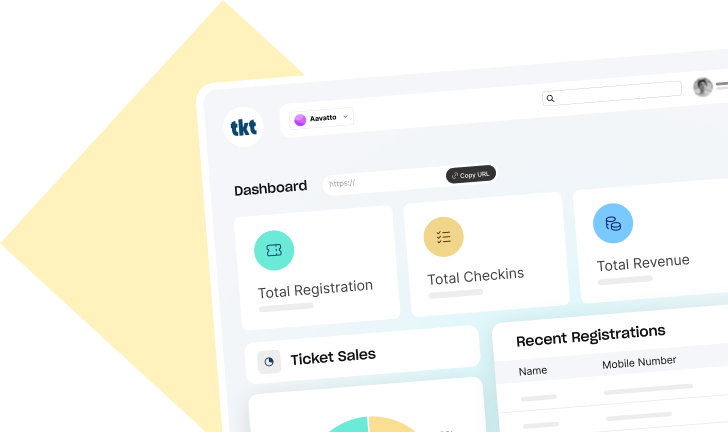







Employee self service HRMS is the part of an HR system that lets employees handle their own routine requests — checking a payslip, applying for leave, updating a bank account or address, viewing attendance — without emailing or messaging HR for each one. In Frappe HRMS, this is delivered through the Frappe ESS portal, a dedicated employee-facing view built on the same data model as the rest of the HR and payroll records.
Employee self service HRMS means employees submit and view their own HR requests directly, instead of routing them through HR staff. The requests still follow approval workflows and permission rules — self-service doesn’t mean unsupervised, it means HR’s role moves from data entry to review and exception handling.
That distinction matters more than the feature list itself, especially for HR and ops teams running multiple locations or a manufacturing operation where requests come from shop-floor staff, site supervisors, and office employees at once. What changes isn’t just “employees have an app now” — it’s where HR’s time actually goes.
What Employee Self Service HRMS Actually Covers
In Frappe HRMS, the ESS portal typically covers a fixed set of employee-initiated actions: leave applications, attendance and shift visibility, payslip and salary structure access, expense claim submission, and updates to personal details like address, emergency contact, or bank information. Each of these maps to a specific doctype in the system — a Leave Application, an Expense Claim, an Employee record — rather than a free-text request that someone on the HR team has to interpret and re-enter.
That mapping is the practical difference from a shared inbox or spreadsheet-based process. When an employee submits a leave request through the portal, it arrives as a structured record already linked to their leave balance, their reporting manager, and the approval workflow assigned to their department or location — not as a message that HR has to read, look up, and manually log somewhere else.
What Actually Changes for the HR Team
Requests arrive pre-structured and routed to the right approver automatically, based on the workflow configured for that request type. HR (or the relevant manager) reviews and approves or rejects, rather than transcribing.
Most requests are routine and clear-cut. What still needs HR's direct attention are the edge cases — a leave request that conflicts with a blackout period, an expense claim above a threshold, a bank detail change that needs verification before payroll runs.
HR's ongoing effort moves toward keeping leave policies, approval hierarchies, and permission structures accurate, since those rules now determine how every self-service request is routed — rather than maintaining the underlying data by hand.
For a multi-location or manufacturing business, this shift is more significant than it sounds. When shop-floor employees at three plants can submit leave and view attendance directly, HR stops being the single point of data entry across sites and instead becomes the point of policy consistency across them. How that plays out for a multi-plant manufacturer that moved attendance and payroll onto one connected system is a useful reference point for what changes operationally once self-service is layered on top of shared attendance and payroll data, not just added as a standalone app.
If your team is still routing every leave request and address change through email or a shared spreadsheet, seeing what moves onto structured workflows is worth a closer look — our HRMS implementation approach covers how that transition is typically scoped.
What Self-Service Doesn't Solve on Its Own
It’s worth being direct about the limits here, since ESS gets sold as a bigger fix than it usually is on its own. A self-service portal doesn’t fix a leave policy that’s inconsistently applied across locations — it just makes the inconsistency visible faster, since every request now routes through the same recorded workflow. It doesn’t replace the need for someone to define approval hierarchies correctly per department or site; if those are set up wrong, requests either get stuck waiting on the wrong approver or get approved without the right oversight.
It also doesn’t remove HR’s role in data accuracy — it relocates it. Employees updating their own bank details reduces re-entry errors, but someone still needs to decide which changes require verification before they flow into payroll, and configure that as a rule rather than a manual check. None of this is a reason to skip self-service; it’s a reason to treat the rollout as a workflow and permissions exercise, not just a portal activation.
Rolling Out ESS: What to Check Before Go-Live
Approval hierarchies are mapped correctly for every department, site, or plant — not just the head office structure copied everywhere.
Leave policies and balances are accurate in the system before employees start viewing and applying against them directly, since a self-service portal will surface any existing data errors immediately.
Role-based permissions are set so employees can only view and edit their own records, and managers only see the teams they're actually responsible for.
Exception paths are defined — who handles a rejected request, a disputed attendance record, or a bank detail change that needs manual verification.
Employees have a way to get help when a request doesn't fit the standard workflow, so self-service doesn't just create a new category of "stuck" requests with no clear owner.