



Where the Chatbot Framing Falls Short
Chatbots get the attention because they’re visible and easy to demo. A support bot or a sales assistant is something you can show someone in five minutes. That visibility has skewed how many businesses think about generative AI, as if a conversational interface is the point rather than one narrow application of it.
The more durable value shows up in the background. A model that reads a stack of invoices and pulls out line items, one that turns a week of scattered field notes into a structured summary, or one that drafts a first version of a report so a person only has to edit rather than start from a blank page. None of these use cases need a chat window at all.
Practical Generative AI Business Use Cases for Daily Operations
Document and data extraction
Reading purchase orders, delivery challans, or scanned forms and converting them into structured records, instead of someone re-typing them into a system.
Internal knowledge search
Letting staff ask a question in plain language and get pointed to the right SOP, policy document, or past project note, rather than searching folder names and guessing.
First-draft reporting and summarization
Turning raw data exports or long email threads into a short summary someone can review and correct, cutting the time spent writing the first version.
Pattern flagging in operational data
Reviewing inventory, sales, or attendance data for anomalies worth a human's attention, such as an unusual dip in stock turnover or a recurring delay in one part of a process.
Drafting repetitive business communication
First-pass responses to common vendor or customer queries, internal memos, or job descriptions, written for a person to review before it goes out.
Where Generative AI Still Falls Short
Being useful in the areas above doesn’t mean generative AI is reliable everywhere. The limits deserve stating plainly, because overselling this is exactly what makes the topic feel like hype in the first place.
Generative models can produce confident, plausible-sounding answers that are simply wrong, especially on numbers, dates, or anything outside the data they were shown. They aren’t a substitute for a properly maintained system of record. Feeding them messy or incomplete operational data tends to produce equally messy output, just faster, and any use case involving financial figures, compliance decisions, or anything customer-facing without review still needs a human checking the work before it goes anywhere.
How to Start Without Overhauling Anything
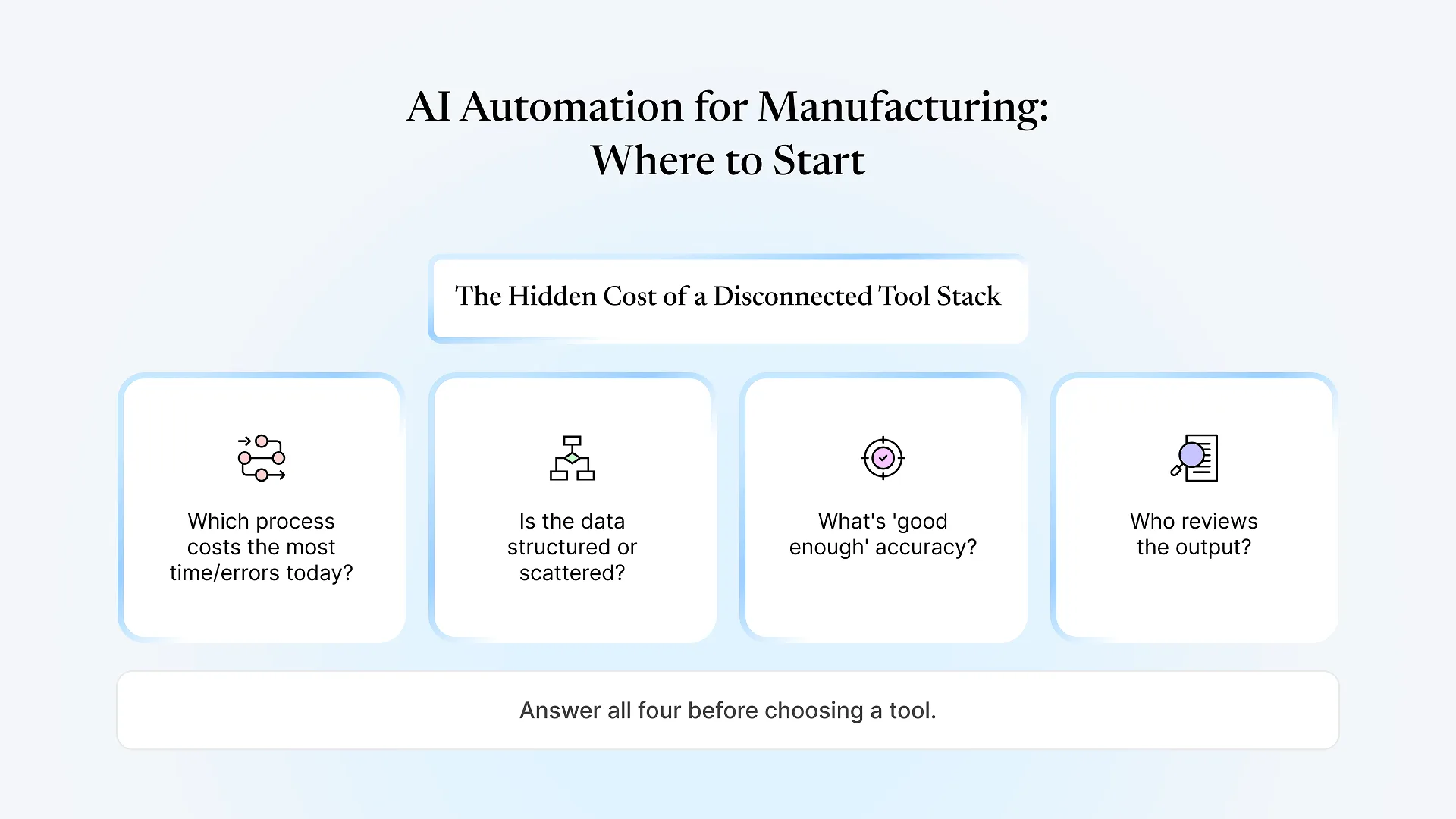
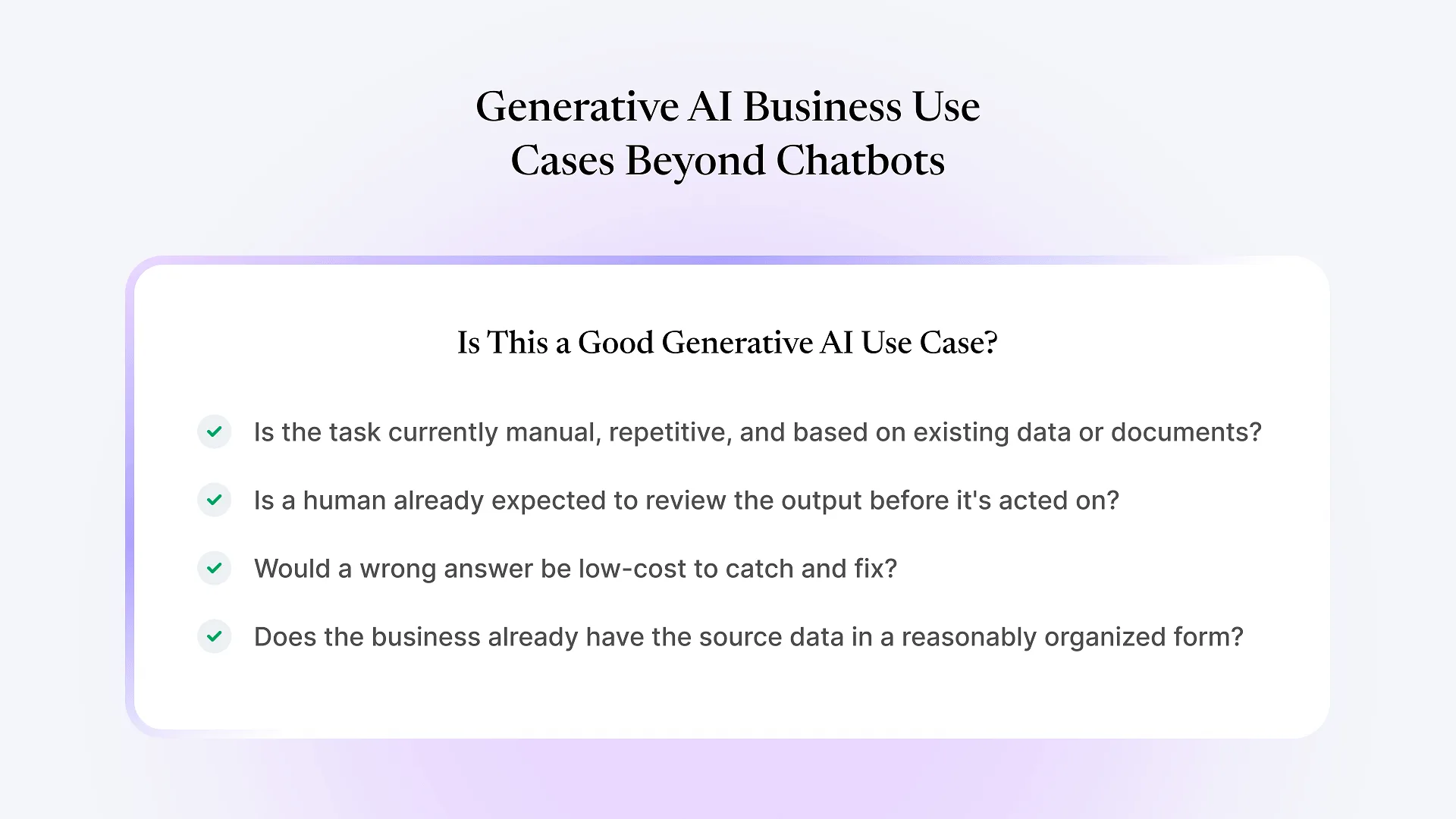
The businesses that get real value tend to start with one narrow, low-risk task rather than a company-wide rollout. A single document type, one recurring report, or one internal search problem is enough to learn whether the underlying data is ready and whether the output is actually trustworthy before expanding further. That pilot also tells you something more useful than a demo ever could: how much editing the output actually needs once a real person checks it against real records.
That’s also the more realistic starting point if this is adjacent to work you’re already doing with your existing systems, rather than a separate initiative bolted on top. Businesses already running structured systems for inventory, HR, or finance tend to have an easier time here, simply because there’s already organized data for a pilot to draw on, rather than starting from scratch.
Frequently Asked Questions
Curious what this looks like against your own operations? Explore our generative AI development work to see where it might fit.