





Why "we use ERPNext" is not the same as "we are audit-ready"
Since 1 April 2023, companies in India using accounting software must use one that records an audit trail of every change to books of account, with an edit log that cannot be disabled. This comes from the MCA’s amendment to the Companies (Accounts) Rules, and statutory auditors now report on whether that trail was operating through the year.
So the auditor is no longer only checking your numbers. They are checking your system’s behaviour.
ERPNext gives you a strong base for this, because of how it treats documents:
Submitted documents cannot be edited
A Sales Invoice, Journal Entry or Payment Entry, once submitted, can only be cancelled and amended. The original stays on record with its cancellation, and the amended copy carries a reference back to it.
Changes are versioned
For document types with change tracking, ERPNext records who changed which field, from what, to what, and when.
Every General Ledger entry links to a voucher
There is no way to post to the ledger in standard ERPNext without a source document behind it.
What statutory and GST auditors actually look at
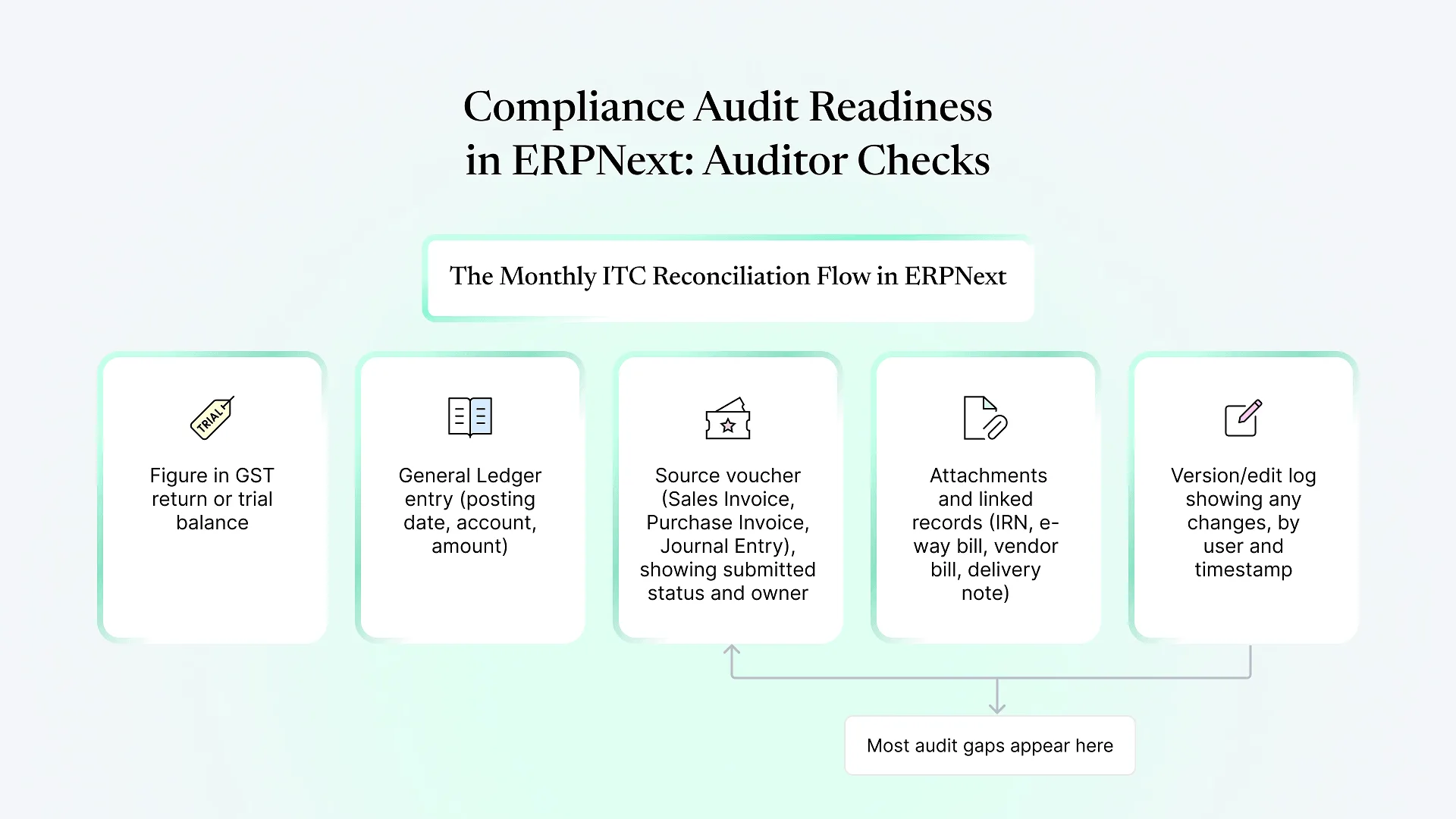
An auditor will take a figure from the trial balance or a GST return and ask you to walk it back: report, ledger, voucher, supporting document. In ERPNext that path exists by design. Where it breaks is when supporting documents (vendor bills, delivery proof, contracts) live in someone's email instead of attached to the voucher.
They will want evidence that the edit log was active for the entire financial year, not switched on in March. They may also ask whether anyone with administrator access could have altered or deleted log records.The India Compliance app used with ERPNext provides an audit-trail setting built around this requirement, which cannot be turned off once enabled. Confirm it is enabled on your version and check when it was switched on, because the date matters as much as the setting.
Auditors check whether closed periods stay closed. ERPNext provides "Accounts Frozen Till Date" in Accounts Settings, with a specific role allowed to post before that date, plus Accounting Period records that can block selected document types within a date range. If neither is used, any user with posting rights can backdate entries into a period you have already filed.
The classic question: can the same person create a supplier, raise a purchase invoice and approve the payment? ERPNext role permissions and workflows can separate these steps, but many instances grant "Accounts Manager" broadly during go-live and never tighten it.
For Indian businesses, this is where audits get detailed. Auditors and GST officers compare:
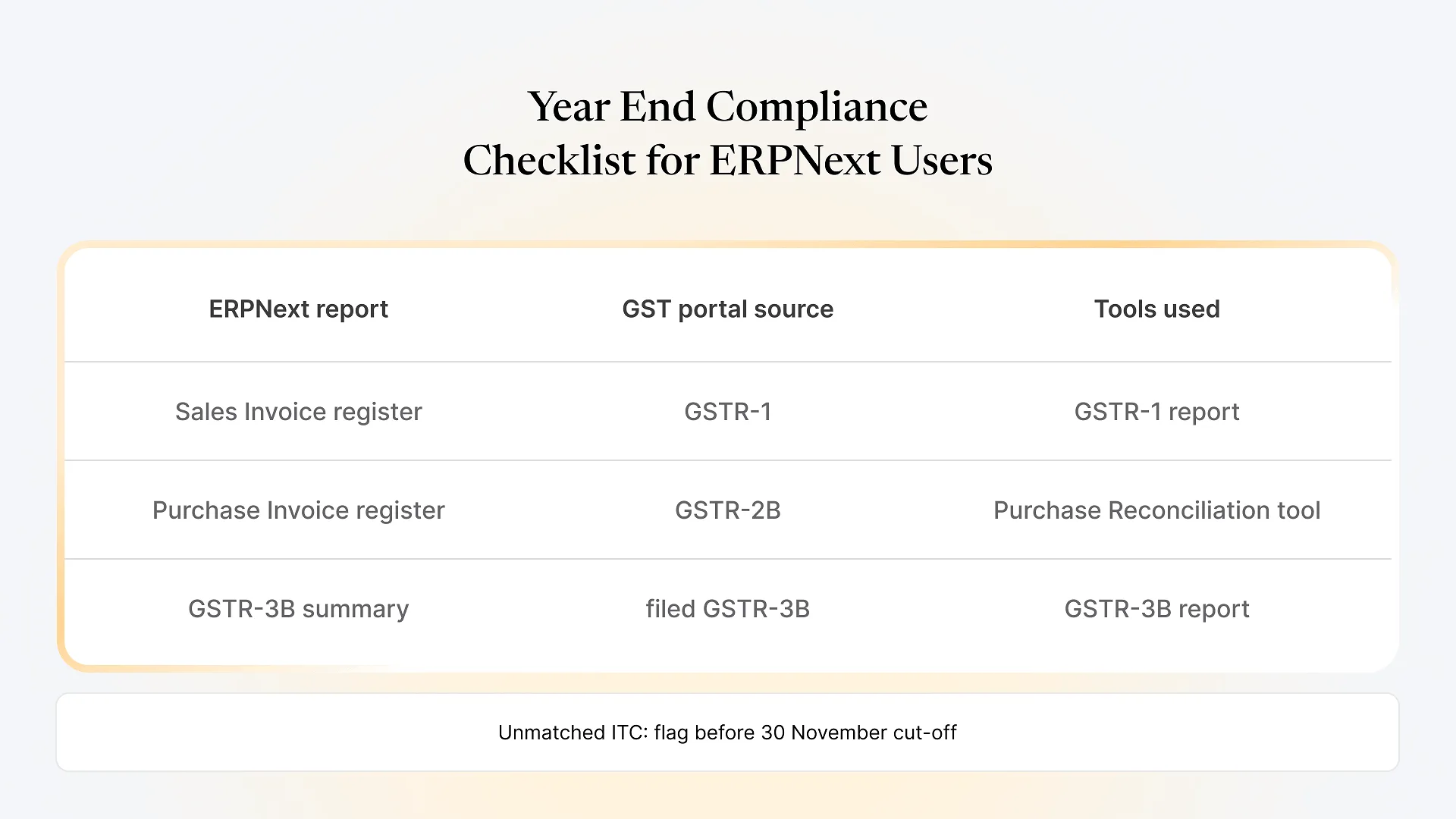
Outward supplies in your books against what was reported in GSTR-1
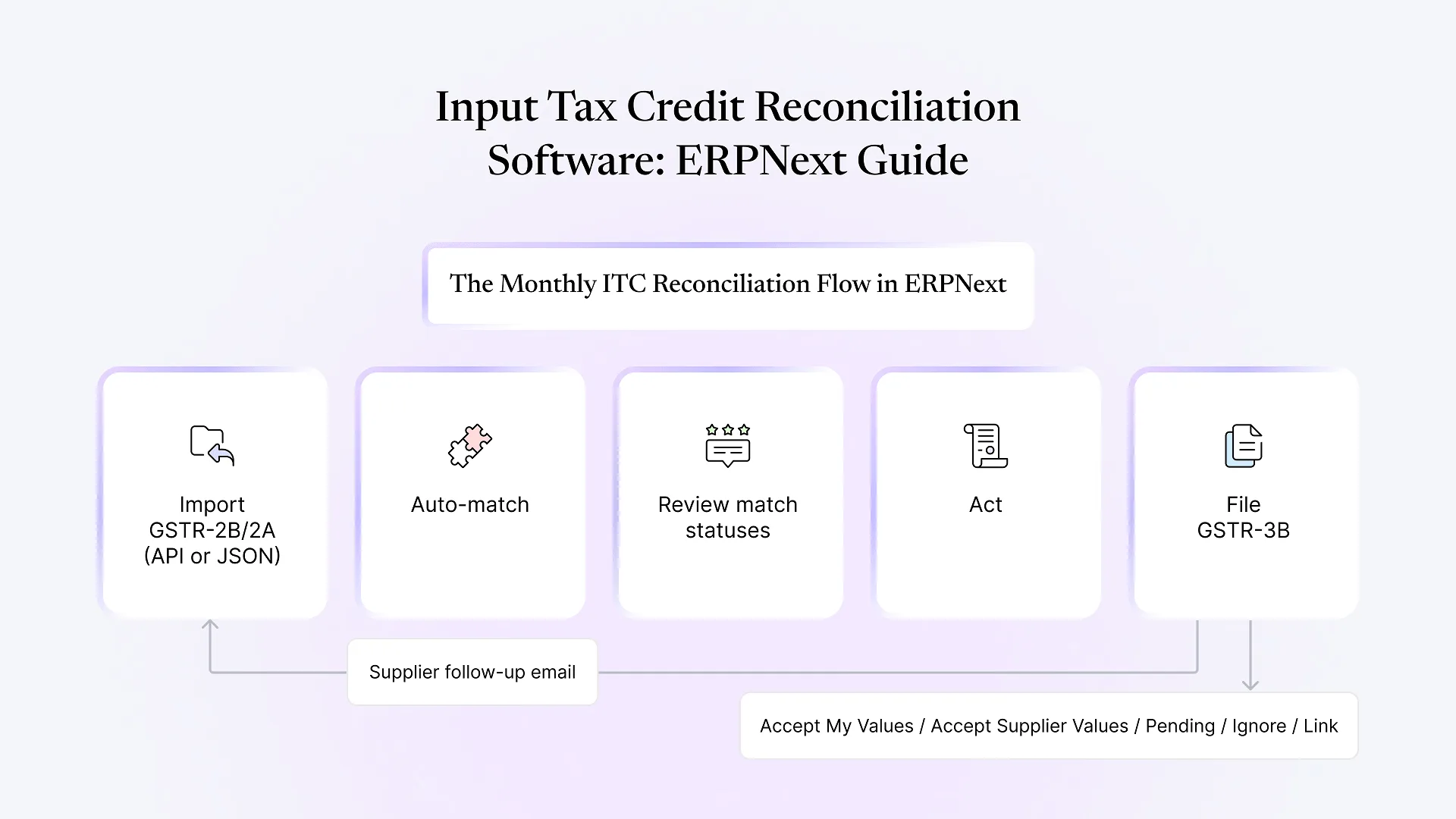
Input tax credit claimed against what suppliers reported (GSTR-2B)
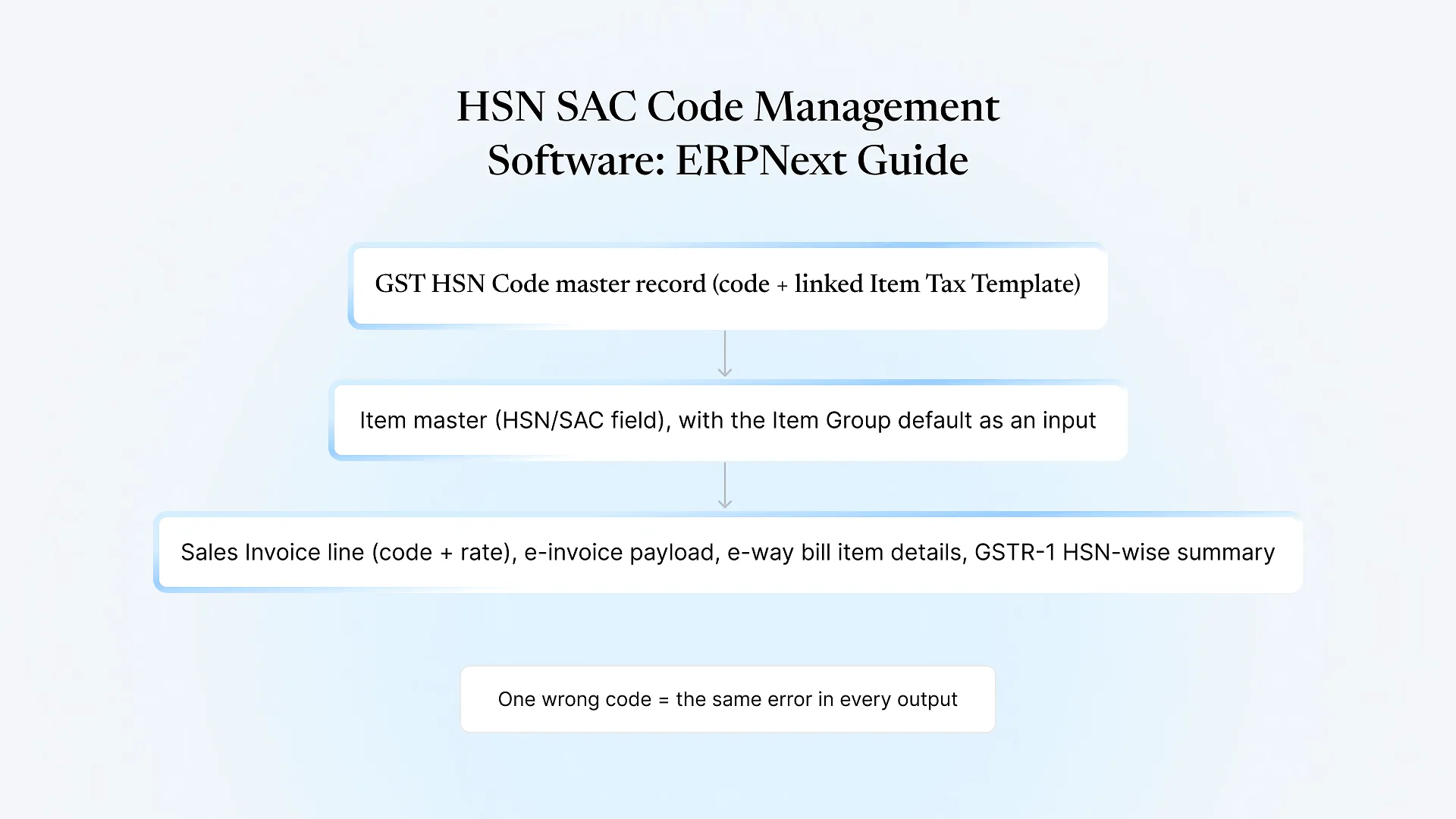
E-invoice IRNs against the invoices in your ledger, including cancellations
E-way bills against actual dispatches and stock movement
Books of account must be kept for eight years under Section 128(5) of the Companies Act, and GST records for 72 months from the due date of the relevant annual return under Section 36 of the CGST Act. Auditors may ask how long your system and backups hold data, and whether historical records remain readable after upgrades.
A compliance audit readiness ERPNext checklist
Audit trail
Audit-trail setting enabled, and the enable date falls before the start of the financial year under audit
Change tracking active on core financial document types
No custom scripts or integrations writing to ledgers outside standard documents
Period controls
"Accounts Frozen Till Date" set to the last closed period
Only a named role allowed to post into frozen periods
Period Closing Voucher submitted for prior closed years
Access and approvals
Supplier creation, invoice entry and payment approval split across roles
Cancellation rights restricted on submitted financial documents
Inactive users disabled, not just left without login
GST and statutory
Company and party GSTINs validated; place of supply correct on templates
Every IRN and e-way bill in the system matches a ledger document, including cancellations
Purchase register reconciled against GSTR-2B before ITC claims are finalised
TDS deductions and certificates reconcile with the ledger
Documentation
Supporting documents attached to vouchers, not stored separately
Backup retention covers the statutory periods above
Red flags auditors notice in ERPNext instances
| What the auditor sees | What it usually means | Typical fix |
|---|---|---|
| Large volume of cancelled-and-amended invoices | Users correcting errors after submission instead of reviewing before | Add a review workflow before submit |
| Journal Entries posting to sales or stock accounts | Workarounds for missing configuration | Fix the item, tax or account setup at source |
| Entries dated in closed months | No period lock | Set Accounts Frozen Till Date and role |
| Admin user posting routine transactions | Shared or over-privileged login | Named users with scoped roles |
| IRNs with no matching invoice, or the reverse | Invoices raised outside ERPNext, or cancellations out of sync | Single issuing path; periodic IRN-to-ledger reconciliation |
What ERPNext will not fix for you
Statutory audit readiness software is only as reliable as the process around it. ERPNext cannot correct opening balances that were migrated wrong, enforce a review step your team skips by sharing logins, or reconcile GST data that never entered the system.
At Aavatto, a large share of pre-audit work on existing ERPNext instances is not new development. It is tightening roles, closing periods, removing scripts that bypass standard documents, and reconciling GST data that drifted. For businesses where the original setup never accounted for audit requirements, our tailored ERPNext implementation work starts from controls first and builds workflows around them.
Frequently Asked Questions
Before your next audit
If you are not sure whether your ERPNext setup would hold up to the checks above, a short review now is easier than explanations later. Book a free ERPNext consultation and we will walk through your audit trail, period controls, roles and GST reconciliation with you, and tell you plainly what needs attention and what is already fine.