



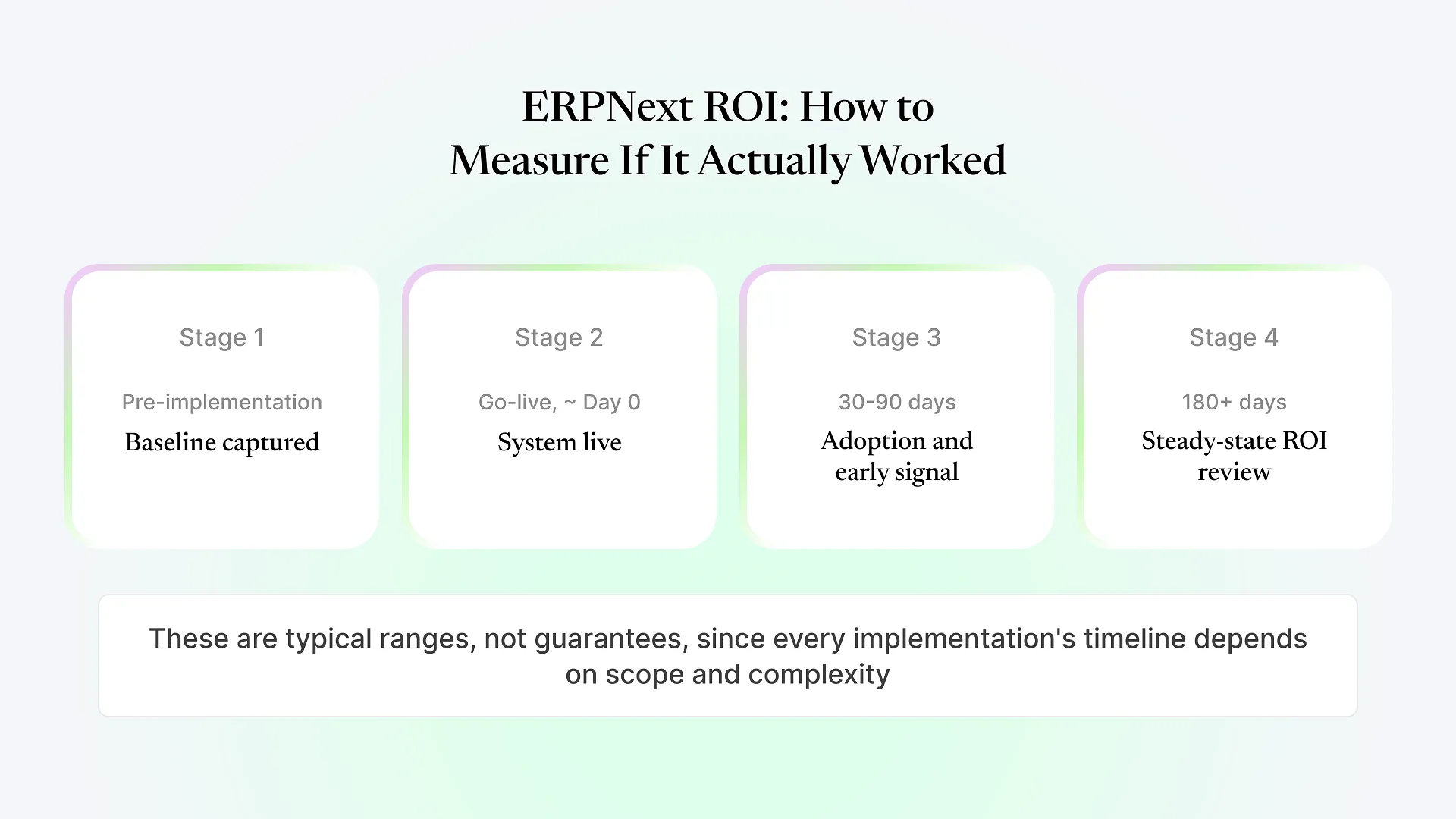
ERPNext ROI is measured by weighing total cost of ownership — implementation, customization, hosting, and ongoing support — against quantifiable gains: fewer manual hours on reconciliation and reporting, reduced stockouts and billing errors, faster financial close, and lower software spend compared to per-user licensed alternatives. Most ERPNext implementations show measurable returns within 6-12 months of stable, adopted use, not from the go-live date itself.
That last point matters more than it sounds like it should. A lot of the confusion around ERPNext ROI comes from measuring it at the wrong moment, against the wrong baseline, or without ever having agreed in advance what “working” actually means.
Why ERPNext ROI Math Looks Different From Other ERPs
Most ERP return on investment guidance online is written for proprietary systems with per-user subscription pricing — NetSuite, Dynamics, SAP Business One. Their cost side scales with headcount every year, indefinitely, for as long as you use the system. That shapes how their ROI models get built: payback period is largely a function of when implementation cost is offset against a recurring license bill you’d otherwise keep paying.
ERPNext doesn’t have that recurring per-seat license cost, because it’s built on the open-source Frappe framework. Your cost is concentrated up front and in the ongoing relationship with whoever implements and supports it — configuration, customization, data migration, hosting or infrastructure, and support — rather than a subscription line that grows every time you hire. For a business adding headcount, that’s a structurally different cost curve than a per-user proprietary system, and it changes when and how ROI shows up.
It doesn’t make ROI automatic, though. A rushed or under-scoped ERPNext implementation creates its own hidden costs — rework, workarounds, users quietly going back to spreadsheets — that can erase the licensing advantage entirely. The absence of a subscription fee changes the shape of the cost side. It doesn’t excuse skipping the measurement.
What Belongs on the Cost Side
the direct cost of scoping, configuring, and building out ERPNext for your workflows.
project team hours, and time from department leads pulled off their day jobs for requirements, testing, and training. This is the most commonly undercounted line item; it's real cost even though no invoice arrives for it.
cloud hosting or on-premise infrastructure, depending on which deployment model you choose.
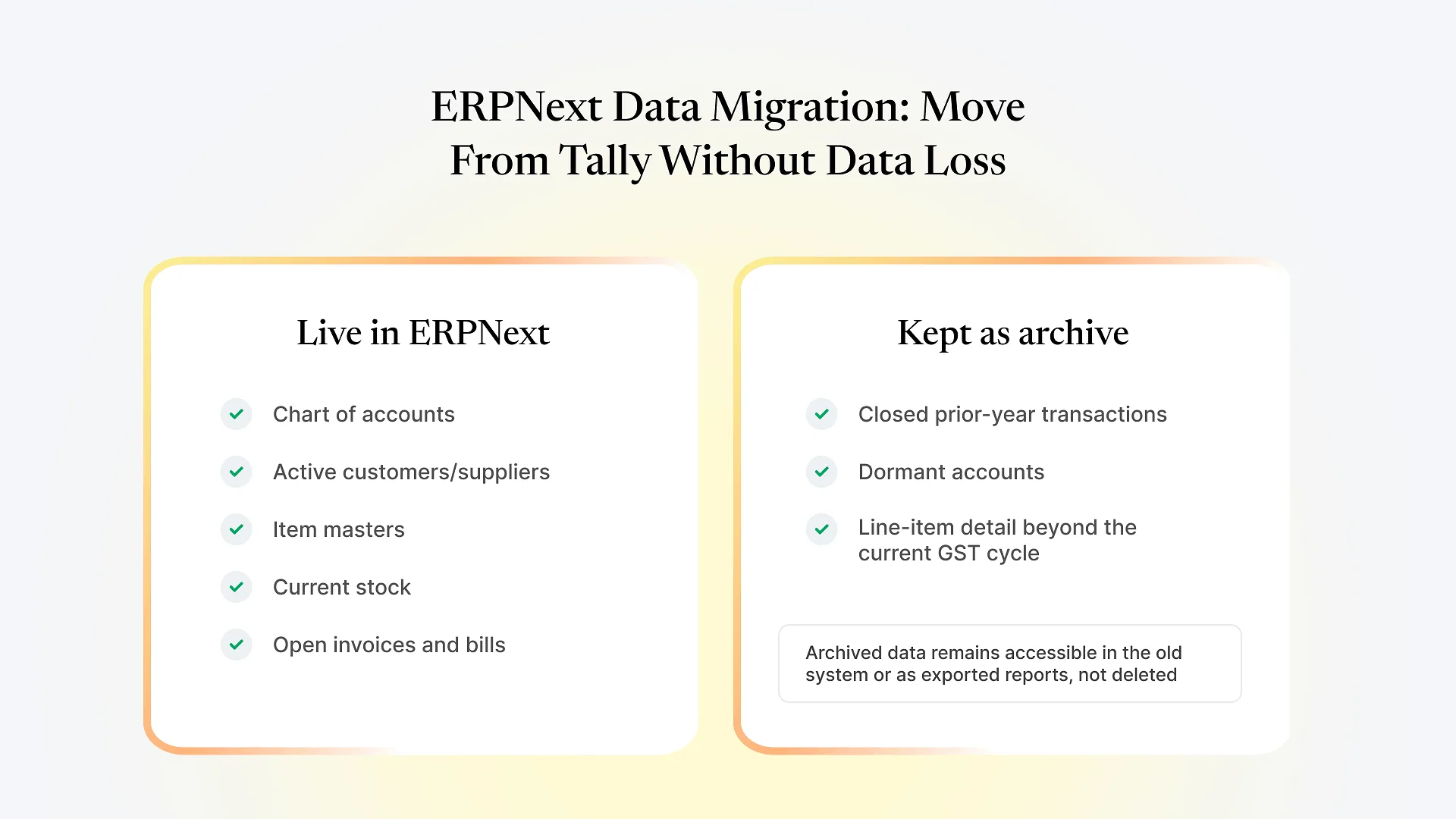
cleaning and moving historical data from spreadsheets, Tally, or legacy systems.
both initial rollout training and the ongoing training needed as new hires join.
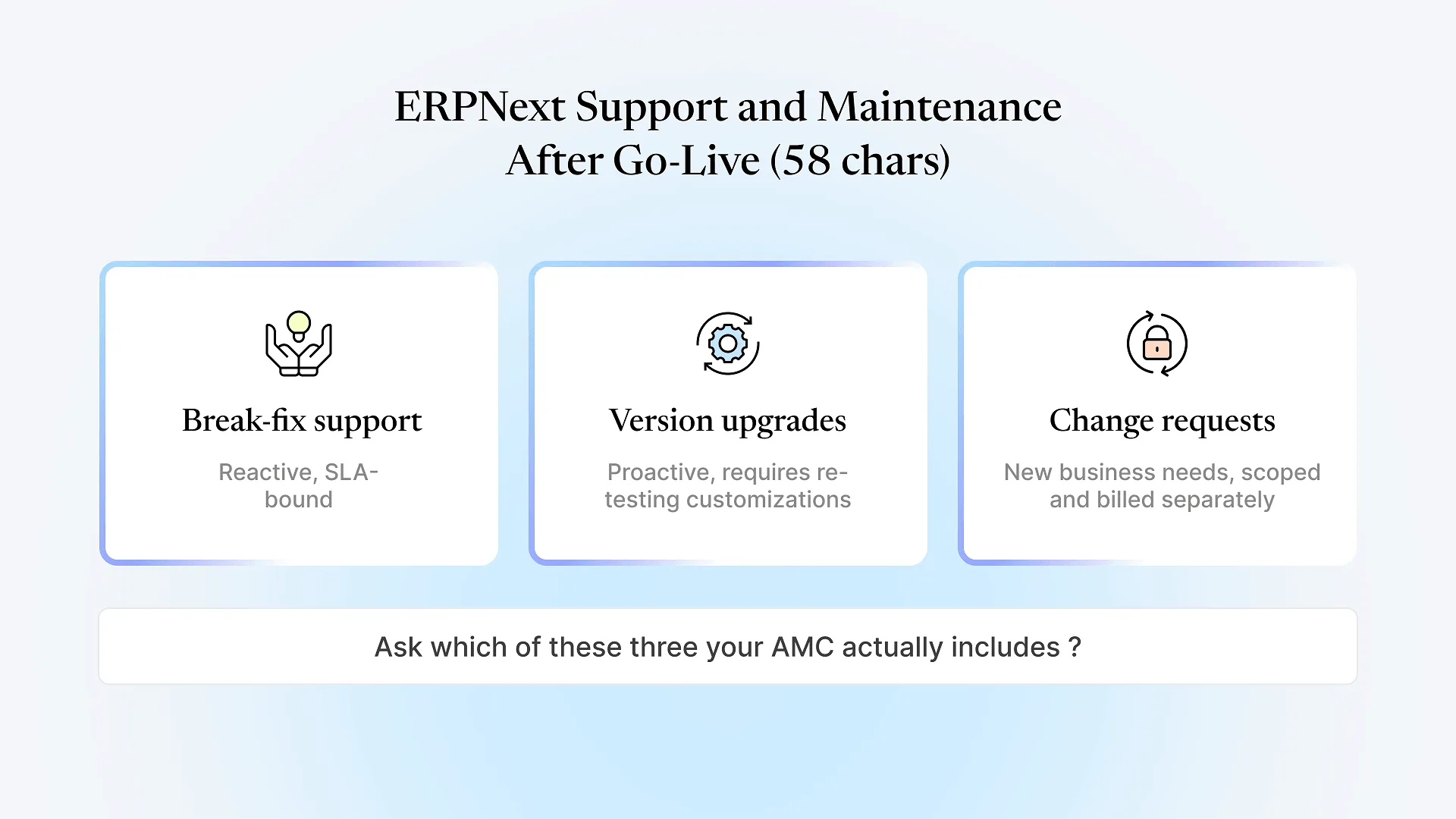
an AMC or support retainer for bug fixes, upgrades, and the inevitable "how do I do X" questions that continue well past go-live.
What Belongs on the Return Side
Quantifiable returns are the ones you can put a number on with reasonable confidence: hours saved on manual reconciliation and reporting, reduced inventory carrying cost from better stock visibility, fewer billing and invoicing errors, a faster financial close cycle, and the cost of any point-solution software ERPNext replaces (a separate inventory tool, a standalone CRM, a spreadsheet-based payroll process).
Qualitative returns are real but resist a clean dollar figure: better decision-making from real-time data instead of week-old spreadsheets, reduced dependence on the one person who "knows how everything works," and audit readiness that used to require weeks of scrambling.
A Practical Framework for Measuring ERPNext ROI
Baseline the "before" state first
Time how long the current version of a key process actually takes, what its error rate is, and what you're currently paying for the tools it will replace. This has to happen before implementation starts — a baseline reconstructed from memory after go-live is a guess, not a measurement.
Pick 3-5 specific metrics tied to your actual business objective
Not "improve efficiency" — something like "days to close month-end" or "stockout incidents per quarter." Vague targets produce vague ROI conversations later.
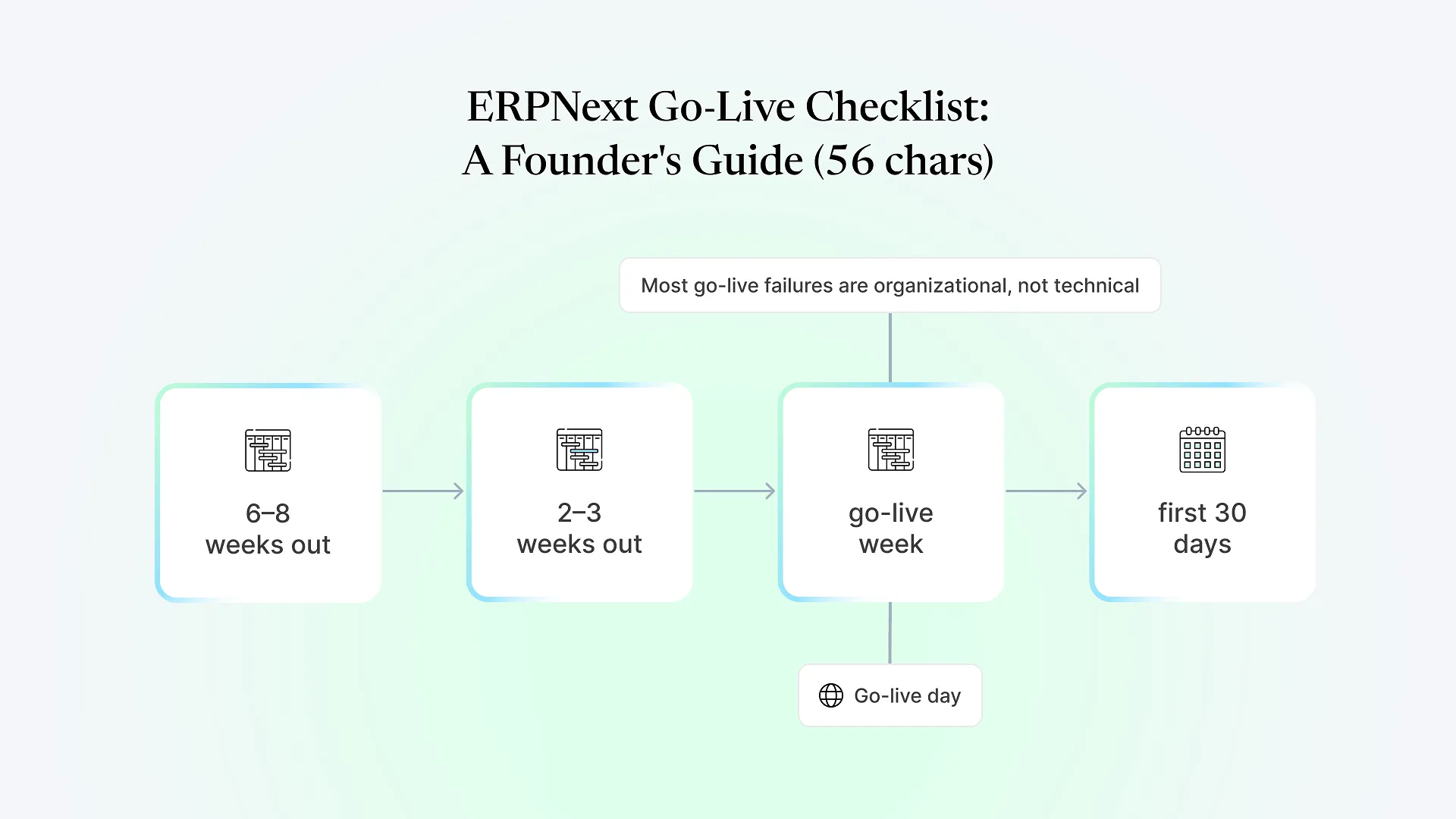
Set measurement checkpoints at 30, 90, and 180 days
Each checkpoint answers a different question: 30 days is adoption, not results. 90 days should show early process-level movement. 180 days is where the real picture forms.
Separate go-live from adoption
The system going live is not the same event as the business realizing value from it. Returns start once people are actually using it the way it was designed to be used, which is rarely day one.
Revisit your assumptions if scope changed mid-project
If the implementation grew or shrank from what was originally planned, your cost baseline needs to reflect that before you compare it to returns.
When You Should Actually Expect to See Returns
Early wins, in the first few weeks, tend to be visibility gains — everyone looking at the same live data instead of a spreadsheet that’s out of date by the time it’s emailed around. These are real but modest.
Process-level metrics — the ones tied to your 3-5 chosen indicators — typically start moving in the 2-4 month range, once users are past the adjustment period and using the system the way it was configured to be used rather than working around it.
Full-cycle metrics, like inventory turns or a consistently faster month-end close, need enough transaction volume flowing through the new system to be statistically meaningful against your pre-implementation baseline. That usually means 6-12 months, sometimes longer for businesses with long sales or production cycles.
Trying to declare ROI in the first 30 days after go-live is measuring the adjustment period, not the outcome. It’s the single most common way this gets done wrong.
Common Mistakes That Distort the ROI Picture
Skipping the pre-implementation baseline
You can't measure improvement against a number you never captured.
Measuring during the adjustment period
and mistaking early friction, or early enthusiasm, for the steady-state result.
Assuming the "do nothing" baseline costs zero
Manual processes and legacy tools have a real cost — spreadsheet errors, duplicate data entry, the software licenses being replaced — and it belongs in the comparison.
Rolling every soft benefit into one inflated number
which tends to undermine trust in the legitimate figures next to it.
Treating go-live as the finish line
so nobody owns measurement afterward and the 90- and 180-day checkpoints simply never happen.