






The Gap Most FMCG Companies Are Actually Fighting
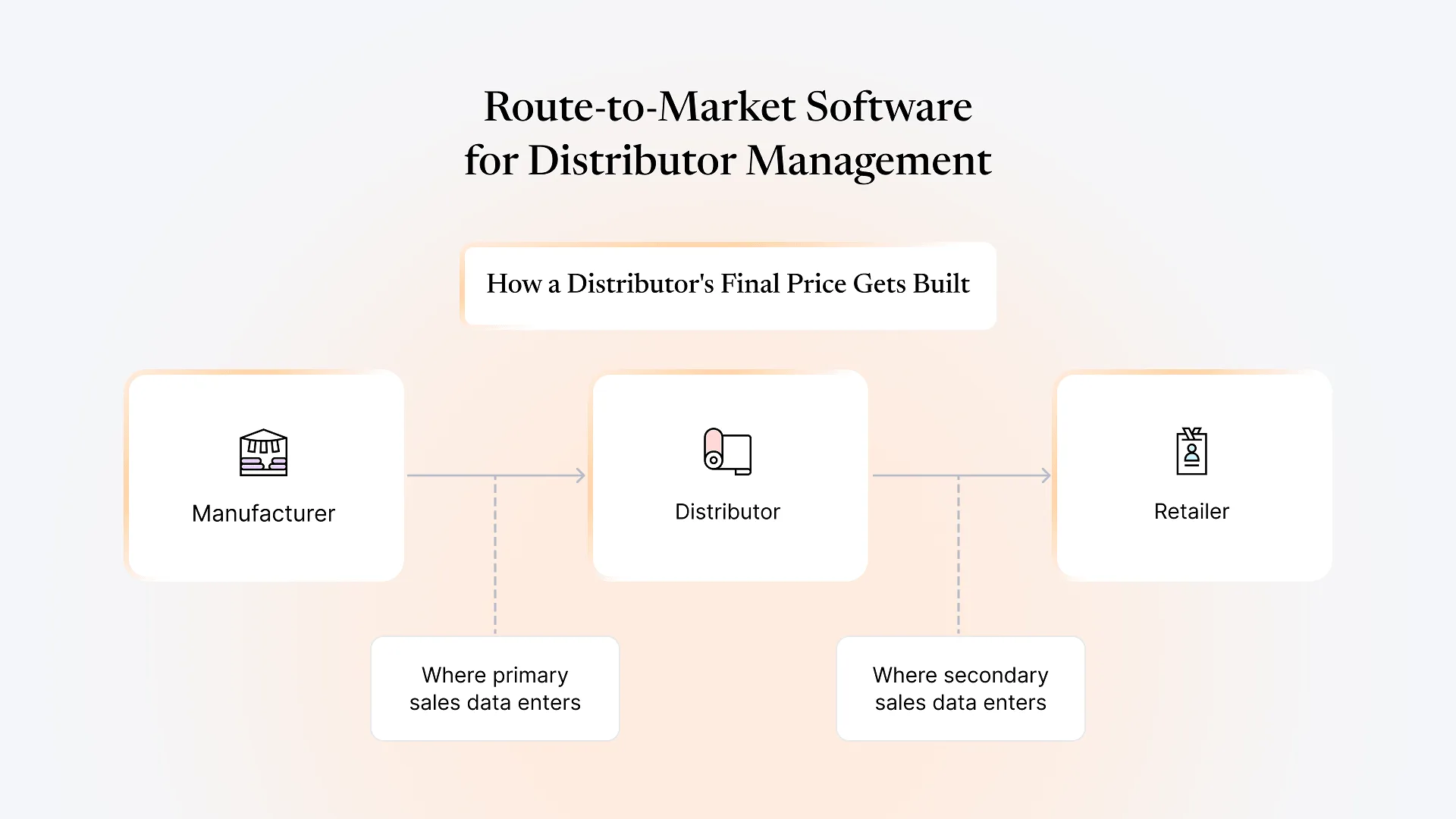
Most FMCG companies can see their primary sales clearly: what left the factory or central warehouse, invoiced to which distributor, on which date. What they usually can’t see, at least not without a manual reconciliation cycle, is what happens next: how much of that stock the distributor has actually sold to retailers, how much is sitting unsold, and how close any of it is to expiry.
That gap matters more than it looks. If you’re shipping based on primary sales alone, you’re effectively forecasting off invoices to distributors rather than real demand. A distributor with a warehouse full of slow-moving stock will keep placing orders to hit incentive thresholds, and you won’t see the problem until returns or write-offs show up weeks later. Schemes and promotions run the same risk: a scheme that looks like it’s working, based on what shipped, might be sitting unsold in a godown two states away.
What Distributor Management Software on ERP Needs to Solve for FMCG Companies
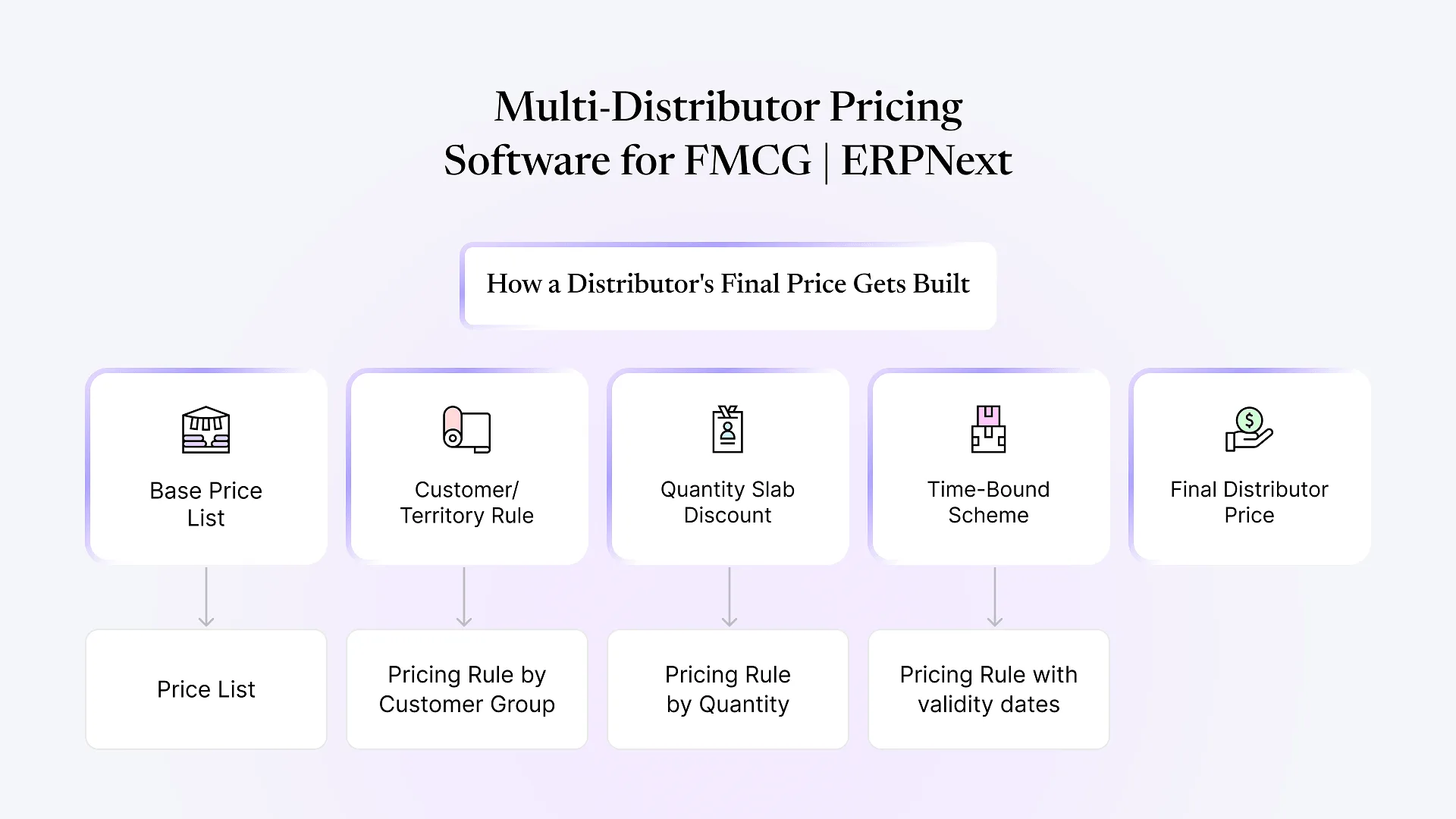
Multi-tier pricing and scheme logic
Different distributors, regions, and sometimes individual retailers run different price lists, margins, and promotional schemes. Those need to apply automatically at order entry, not get corrected after the fact.
Credit limits enforced per distributor
not just tracked at the company level in a separate ledger. A distributor over their limit shouldn't be able to place another order until it's resolved. Secondary sales visibility, ideally close to real time, so demand planning reflects what's actually moving through retailers, not just what shipped to distributors.
Retailer-level order capture
that feeds back into the same system, usually through field sales reps rather than distributors self-reporting.
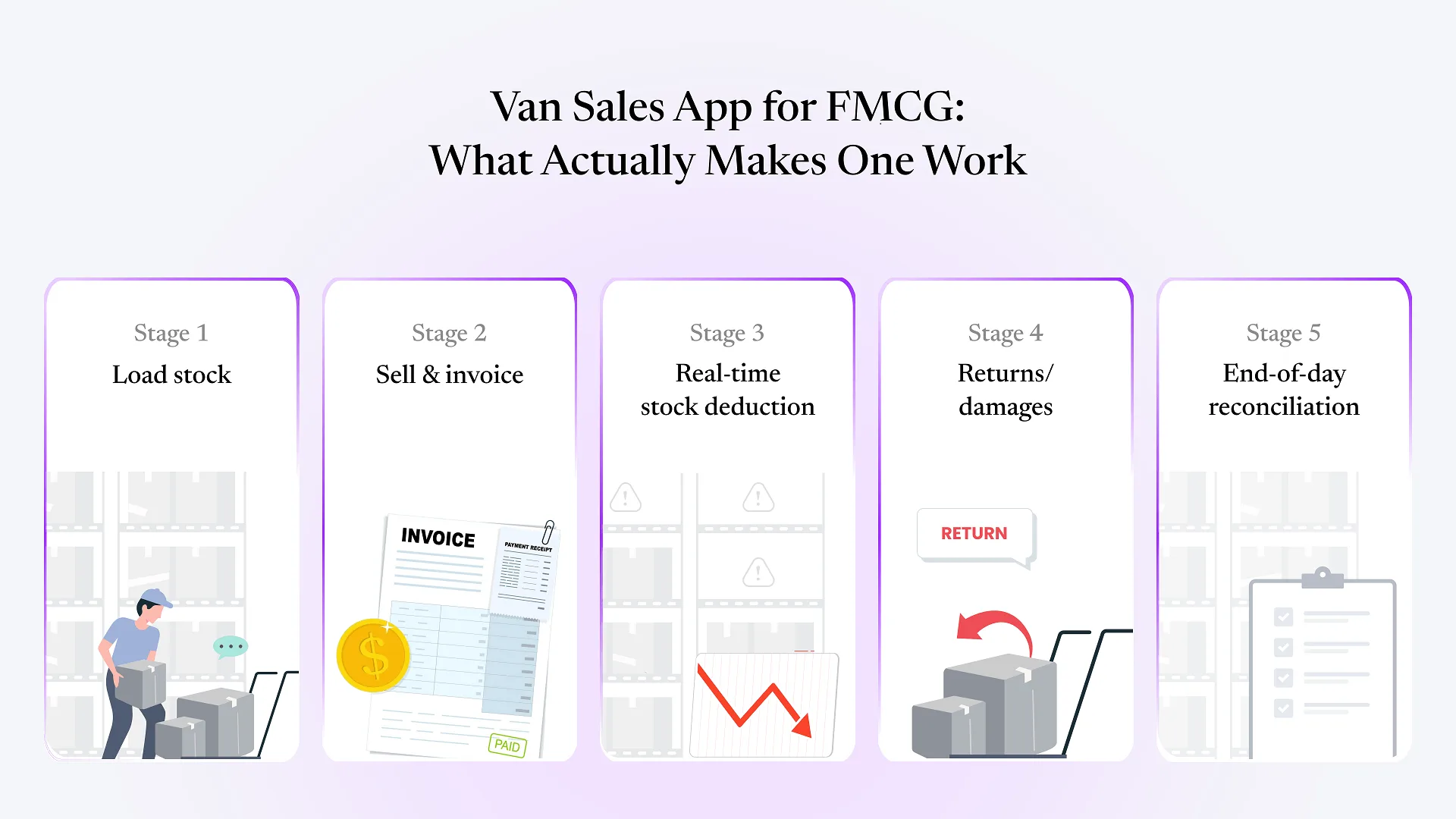
Returns and expiry tracking
that flows back through the same tiers it went out through, so a return at retailer level is visible at the company level without three phone calls.
GST-compliant invoicing at every transaction
in the chain, not just the first one.
The Primary vs. Secondary Sales Visibility Gap
Show three tiers: Company Warehouse → Distributor → Retailer
Mark where "primary sales" visibility typically ends (at the distributor invoice)
Mark where "secondary sales" data usually starts to go dark (distributor to retailer)
Annotate the consequences at that dark zone: stock ageing, scheme inaccuracy, credit exposure
Show the same flow with an ERP-integrated DMS layer closing the gap, with a line back to company-level reporting
Suggested format: horizontal flow diagram, two stacked versions (before/after)
How ERPNext Structures a Distributor and Retailer Network
The secondary sales piece (visibility into what retailers are actually buying) usually comes from one of two places: distributors entering their own sales through a lightweight portal, or field sales reps capturing retailer orders directly during outlet visits. We’ve written more specifically about how ERPNext connects field sales to real-time inventory for companies where reps, not distributor self-reporting, are the more realistic data source.
Where This Gets Genuinely Complicated
A distributor who's run their business on a notebook and a phone for twenty years isn't going to log into a portal because it makes your reporting cleaner. If there's no benefit visible to them, such as faster order confirmation, clearer credit standing, or fewer disputes, adoption stalls regardless of how well the system is built.
For lower-tech distributors, a simpler order capture method (structured WhatsApp order forms, a rep who enters it for them) bridged into ERPNext often works better than insisting on portal logins for everyone. The goal is the order landing in the system correctly, not universal login adoption.
If distributors own stock outright once it's invoiced to them, secondary sales visibility depends entirely on them reporting it. If you're running consignment, ERPNext can track that stock as yours until it sells through, which gives you real visibility but adds inventory and reconciliation complexity you need to be ready for.
| Without an integrated DMS | With ERP-integrated distributor management | |
|---|---|---|
| Secondary sales visibility | Reconciled monthly, if at all | Available as retailer orders are captured |
| Pricing and scheme accuracy | Manually applied, error-prone across regions | Applied automatically by Customer Group/Territory |
| Credit control | Tracked separately, enforced inconsistently | Enforced at order entry per distributor |
| Returns and expiry | Reported informally, delayed | Flows through the same order chain |
Frequently Asked Questions
Talk to us about your FMCG operations if you’re weighing whether to build distributor and retailer management into your existing ERPNext setup or a new implementation. We’ll look at your actual channel structure before recommending anything.