



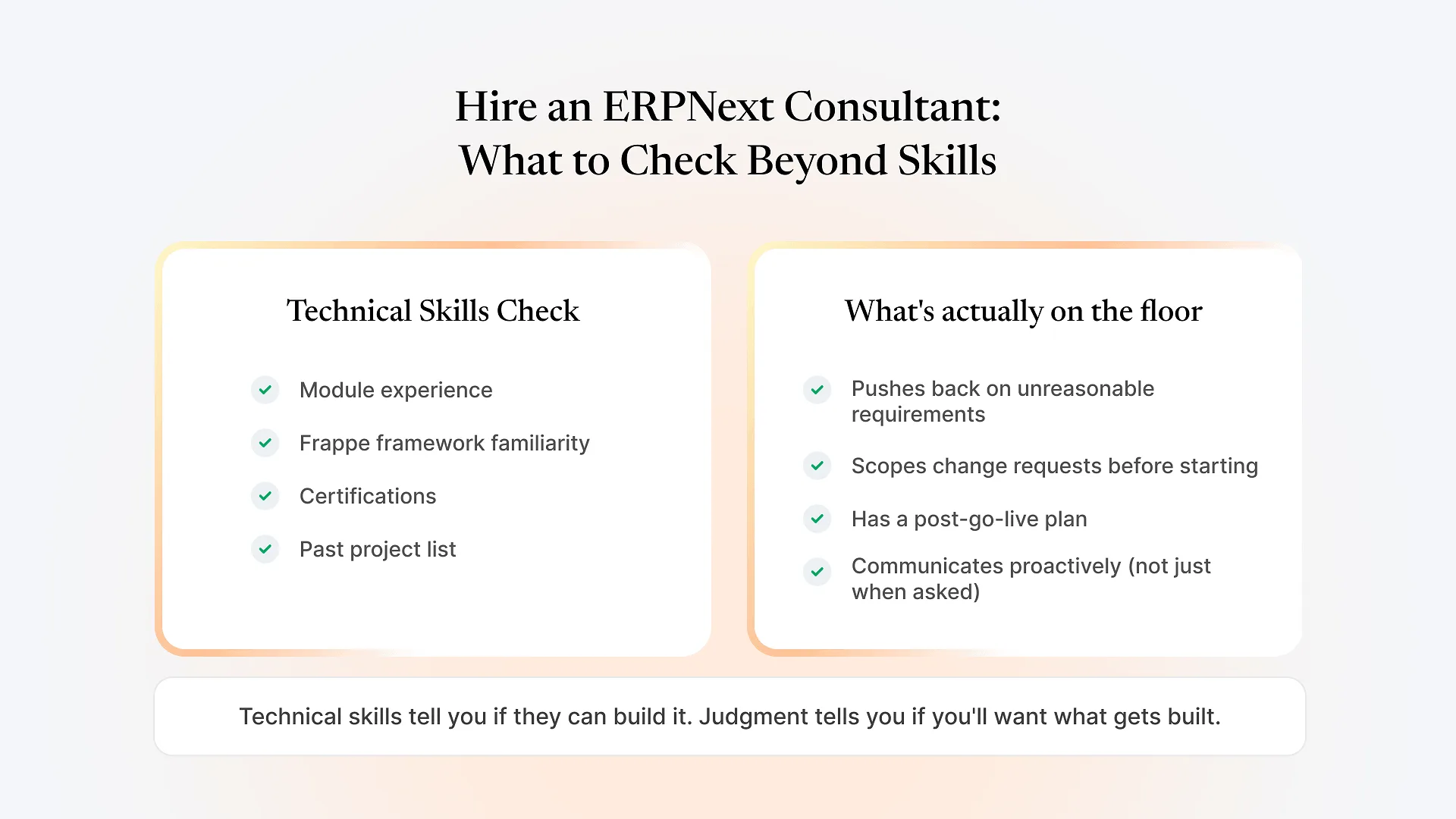
Most ERPNext consultants can list the modules they’ve worked in — Accounting, Inventory, Manufacturing, CRM. That’s the easy part to check, and it’s rarely where implementations actually go wrong. A good ERPNext consultant does more than configure modules: they push back on requirements that don’t hold up, scope change requests before they balloon, and have a real plan for what happens after go-live. Technical familiarity gets you in the room. Judgment is what determines whether the project stays on track once things get complicated — and something on every implementation eventually does.
If you’re evaluating candidates to hire an ERPNext consultant, the module checklist is worth five minutes. The rest of this guide is about the parts that don’t show up on a resume.
Start with technical fit, but don't stop there
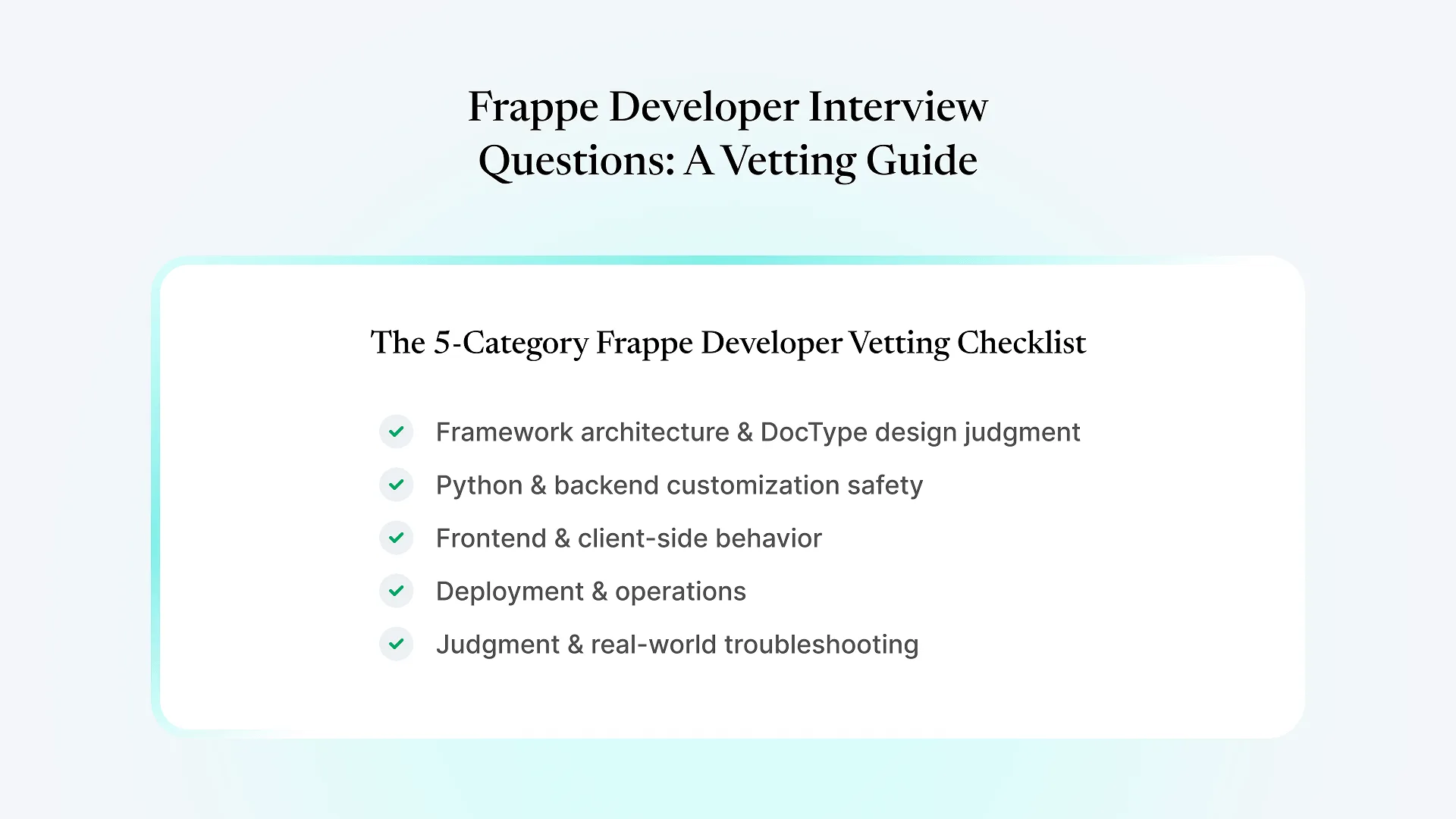
Hands-on implementation experience, not just training or certification — ask for two or three real projects, ideally in a business similar in scale or complexity to yours
Familiarity with the specific modules your business needs (manufacturing and BOM management look very different from services or retail configurations)
Comfort with the Frappe framework itself, not just ERPNext's out-of-the-box screens — this matters the moment you need something customized
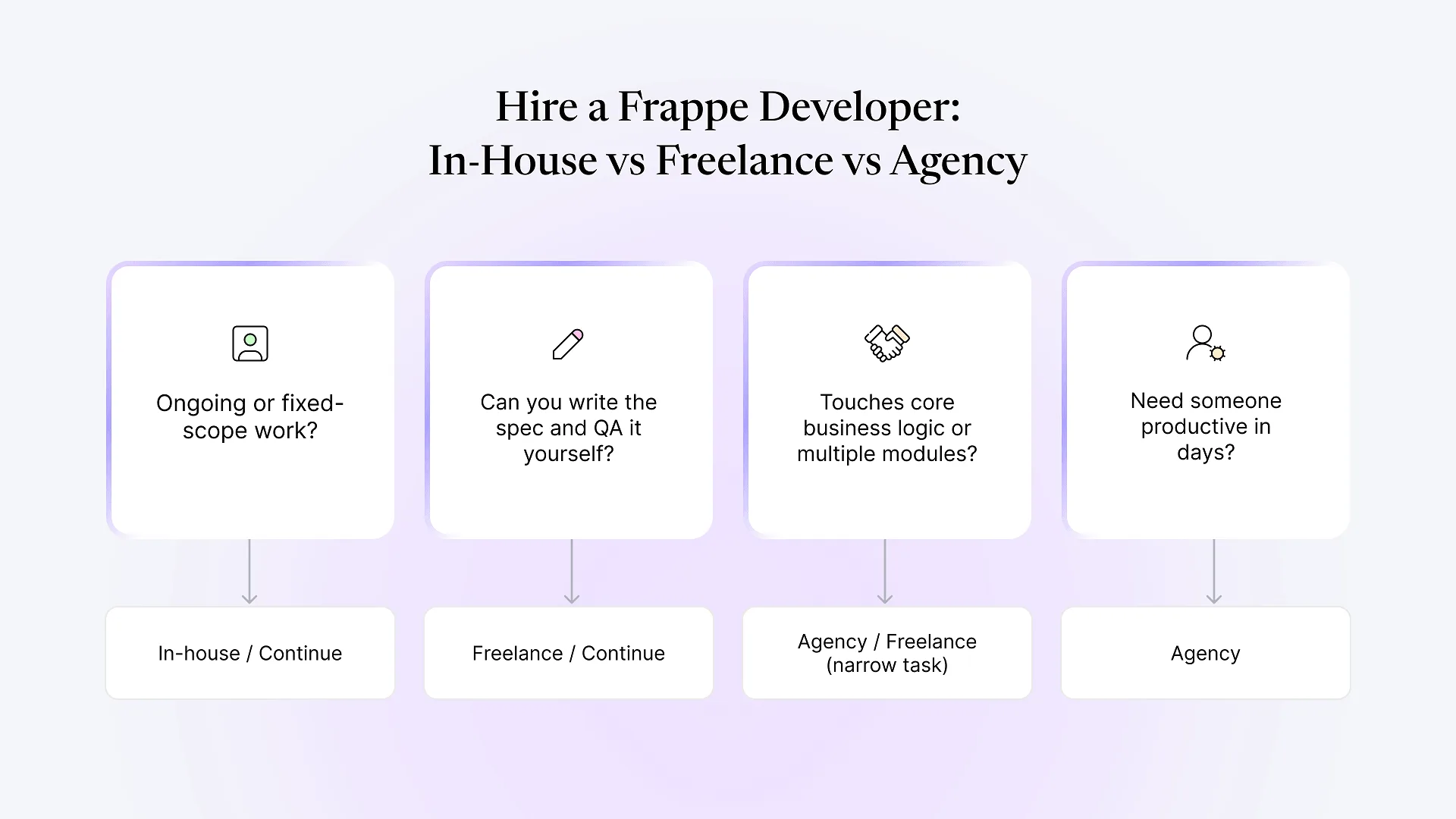
Whether they're a consultant (business process and configuration) or a developer (custom code), or both — many small studios blur this line, which is fine as long as you know which one you're actually getting
Do they question your requirements, or just implement them?
This is the single biggest tell. Ask a candidate to walk through how they’d handle a hypothetical requirement — something slightly unreasonable, like “we need approval routed through six people before any purchase order over ₹10,000.” A consultant who just says “sure, we can build that” without asking why, or what happens when the sixth approver is on leave, is optimizing for saying yes in the interview, not for your system working in six months.
A consultant worth hiring will ask what problem the requirement is solving, whether ERPNext already has a simpler path to the same outcome, and what the tradeoff is if you insist on the custom version. That pushback isn’t friction — it’s the same instinct that keeps a project from accumulating twenty small customizations that make every future upgrade harder.
How do they handle change requests?
Every implementation grows beyond its original scope — new requirements surface as your team actually starts using the system. What separates a professional engagement from a frustrating one is whether change is handled with a process or just absorbed silently until the invoice (or the timeline) reflects it.
Ask directly: “Walk me through what happens when we ask for something that wasn’t in the original scope.” A vendor with a real answer will describe some version of documenting the request, estimating effort, and getting your sign-off before starting — even if it’s informal. A vendor without one will say something vague about “we’re flexible” or “we’ll figure it out,” which usually means undocumented scope creep on both sides.
If any of this sounds familiar — a consultant relationship that started well and got vague the moment real requirements showed up — it’s worth keeping that pattern in mind as you work through the rest of this checklist.
What happens after go-live?
A consultant who disappears the week after launch, or who treats go-live as the finish line rather than the starting point, is a pattern worth catching before you sign anything — not after. ERPNext systems need adjustment in the first few months as real usage surfaces gaps that testing didn’t catch: a report that’s missing a field, a workflow that technically works but slows people down, a permission that’s too restrictive for how the team actually operates.
Ask what support looks like in the weeks after go-live, whether it’s included or billed separately, and how quickly they typically respond to a stuck user. Vague answers here (“we’re always available”) are less useful than a specific one — for example, a defined check-in point at 30 and 60 days, with standard fixes covered under the original scope for a set window afterward.
Communication style matters more than it sounds like it should
A consultant who’s technically excellent but only communicates when you chase them is a liability on a multi-month project. Watch for this during the sales process itself — it’s the best preview you’ll get of what working together will actually feel like. Do they respond promptly? Do they proactively flag risks, or only mention problems once they’ve become urgent? Do they explain tradeoffs in plain language, or bury you in jargon when a straight answer would do?
None of this shows up on a technical skills checklist, and all of it determines whether a six-month implementation feels manageable or exhausting.
This isn’t theoretical for us. Aavatto works on ERPNext and Frappe engagements across India and the Middle East, and a meaningful share of that work is picking up implementations after another vendor’s relationship went sideways — usually because one or more of the items above wasn’t checked upfront.
ERPNext Consultant Checklist: Quick Reference
Frequently Asked Questions
If you’re ready to compare what a structured, accountable engagement actually looks like, see our developer engagement options — including how we scope work, handle change requests, and structure support after go-live.