



Why Frappe hiring is narrower than generic developer hiring
Frappe and ERPNext aren’t mainstream frameworks in the way React or Django are. A developer who’s strong in Python generally still has to learn Frappe’s doctype system, its permission and workflow engine, its ORM quirks, and how customizations survive (or don’t) across version upgrades. That’s a real ramp-up period, not a formality — and it’s the reason a generic “full-stack developer” job posting rarely produces a candidate who can be productive on a Frappe codebase in week one.
This matters for how you frame the hire. You’re not just filling a Python role; you’re looking for someone who already understands doctypes, client scripts, server-side hooks, and how ERPNext’s modules interact — or who has the specific aptitude to get there fast under supervision.
The three hiring paths, compared
| In-house | Freelance | |
|---|---|---|
| Agency | Best for | Ongoing, long-term Frappe/ERPNext work |
| Small, well-scoped tasks with a clear spec | Time-bound projects needing architecture judgment or a full team | Time to productive |
| Weeks to months (sourcing + ramp-up) | Days to a couple weeks | Days, since the team already knows Frappe |
| Cost structure | Salary + benefits + recruiting overhead | Hourly or per-task, no overhead |
| Project or retainer rate, bundled expertise | Oversight needed | Low once hired and trained |
| High — you own the spec, QA, and coordination | Low — the agency owns delivery and quality | Continuity risk |
| Low if retention is good; high if the person leaves | High — one person, one point of failure | Low — the team, not one individual, carries the knowledge |
In-house
Freelance
A freelancer is a reasonable choice for a narrow, well-defined task — a specific report, a small integration, a bug fix — where you can write a precise spec and evaluate the output yourself. The risk grows with project size: Frappe’s doctype relationships and hook system make it easy for an under-experienced freelancer to build something that works in isolation but breaks another part of the system, and there’s no one else checking that work before it ships.
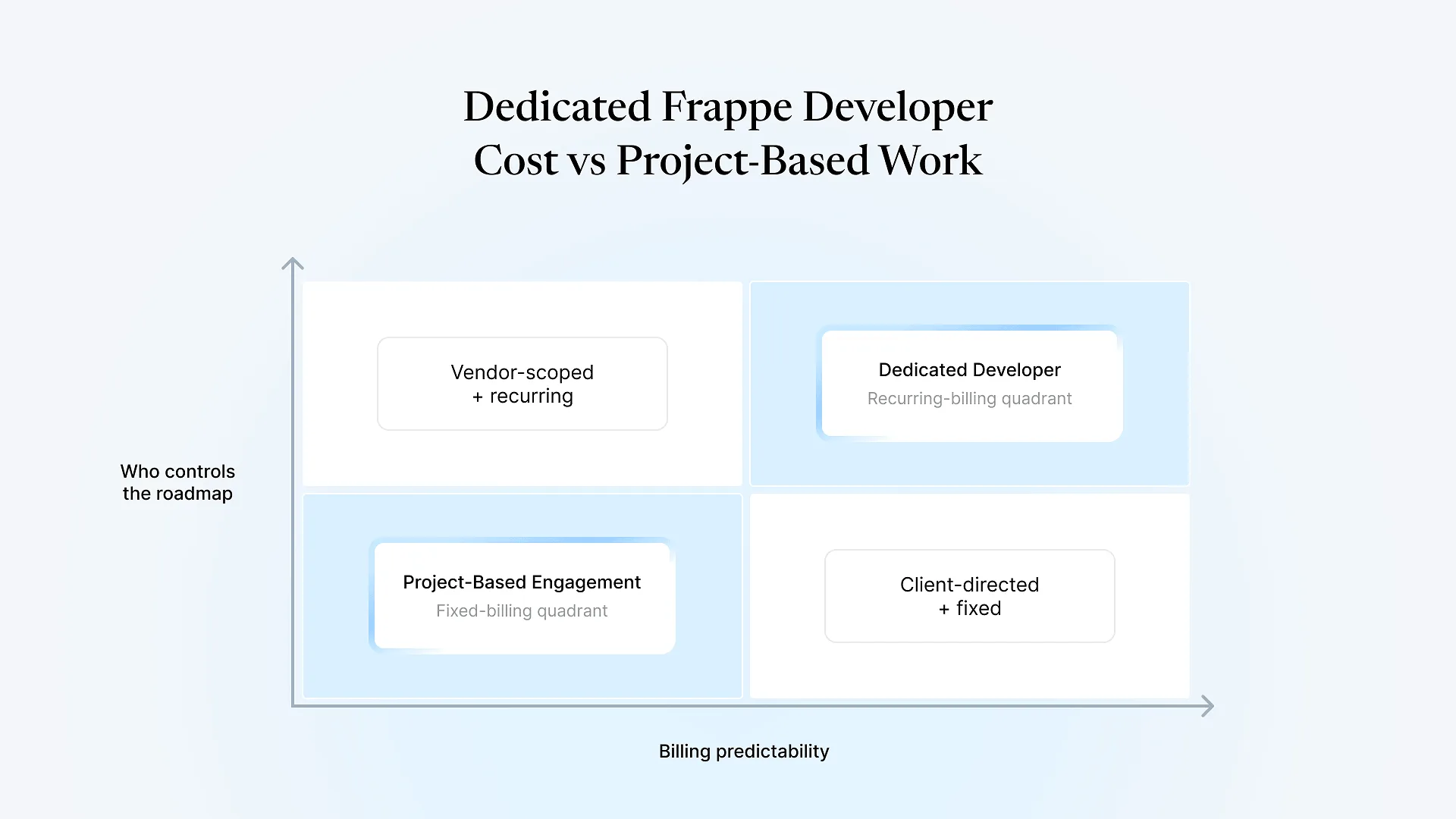
If you want freelance-style flexibility without carrying that quality risk alone, that’s a gap worth weighing against the engagement models below.
Agency
An agency fits when you need Frappe or ERPNext expertise applied correctly from day one — a new implementation, a significant customization, or work that touches core business logic where mistakes are expensive to unwind. You get a team that already understands doctype design, upgrade-safe customization, and common ERPNext failure modes, without spending months building that knowledge internally. The honest tradeoff is less day-to-day control than managing an employee directly — you’re trusting the agency’s process rather than supervising each line of code yourself, which is why choosing one with a transparent way of working matters.
Aavatto has built and staffed Frappe teams since 2020, including stepping into implementations that started with an in-house hire or freelancer who couldn’t carry the project through. That vantage point — seeing where each path tends to break down — is exactly what this framework is drawn from, not a generic vendor comparison.
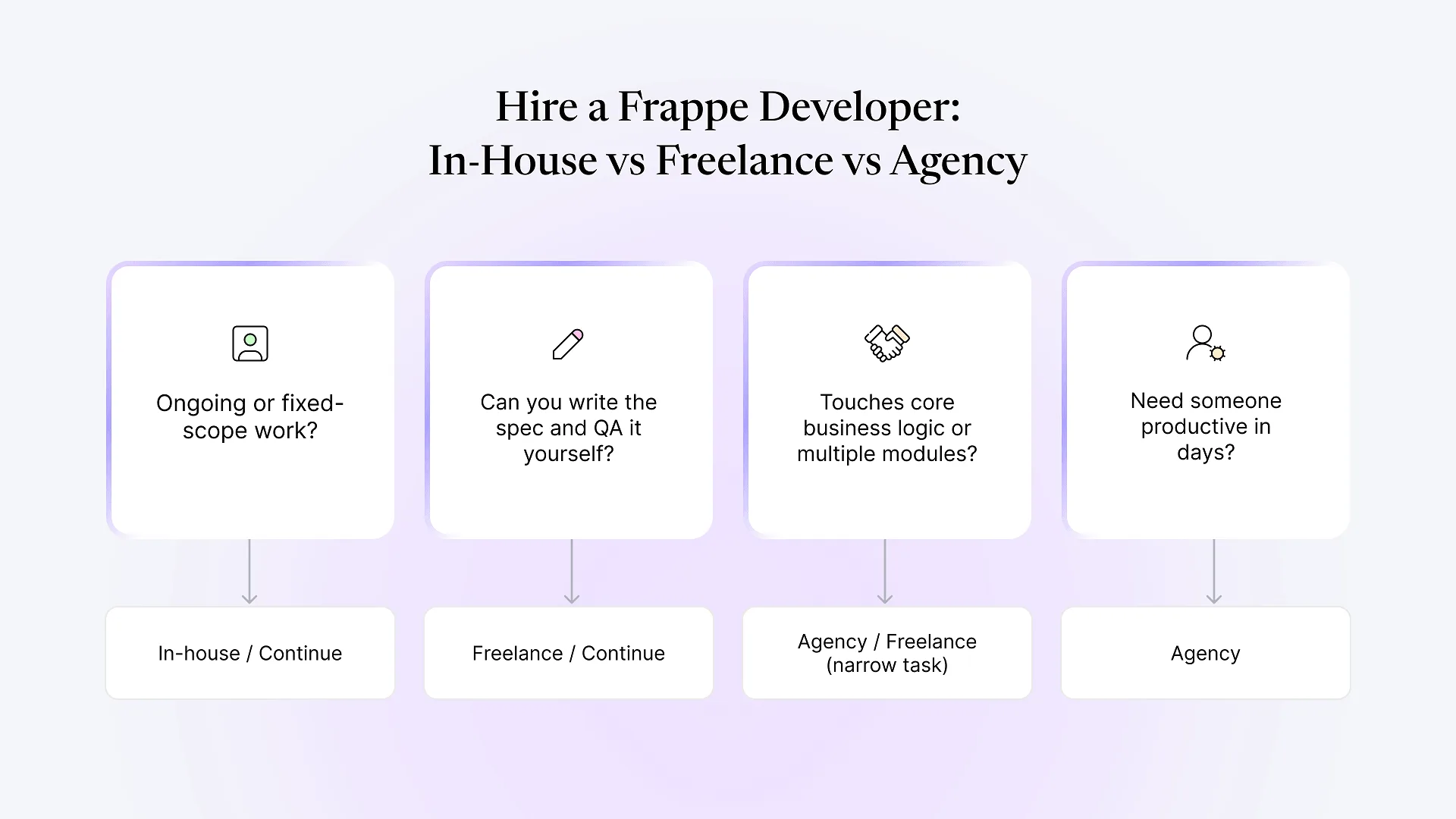
A quick decision framework
Is this ongoing work or a fixed project?
Ongoing → lean in-house. Fixed → freelance or agency.
Can you write a precise, self-contained spec and QA the result yourself?
Yes → freelance is workable. No → you need more oversight than a single freelancer typically provides.
Does the work touch core business logic, upgrades, or multiple modules at once?
Yes → agency, where the risk of an isolated fix breaking something else is lower.
How fast do you need someone productive?
Days, not months → agency or an experienced freelancer, not a from-scratch in-house search.
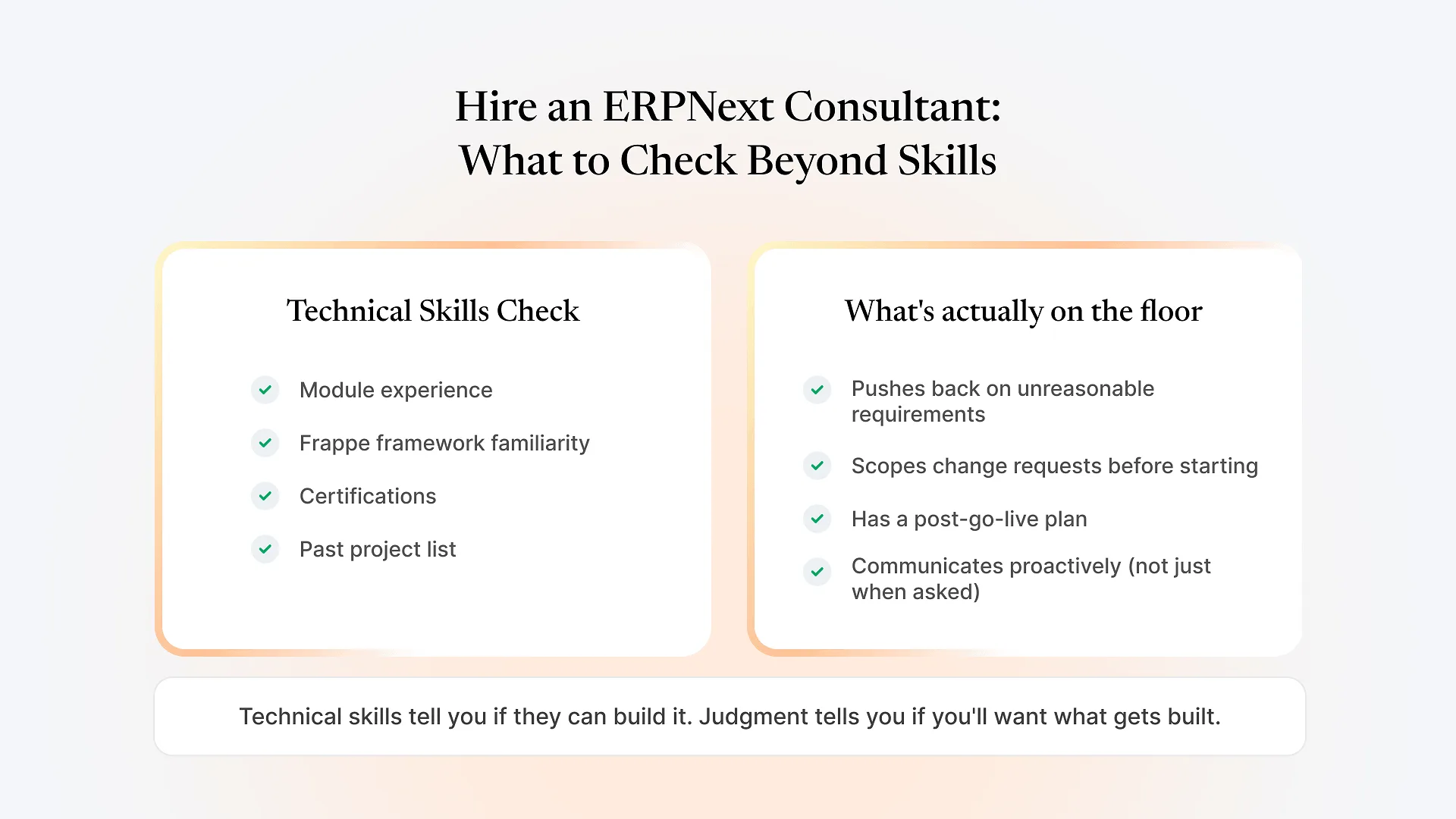
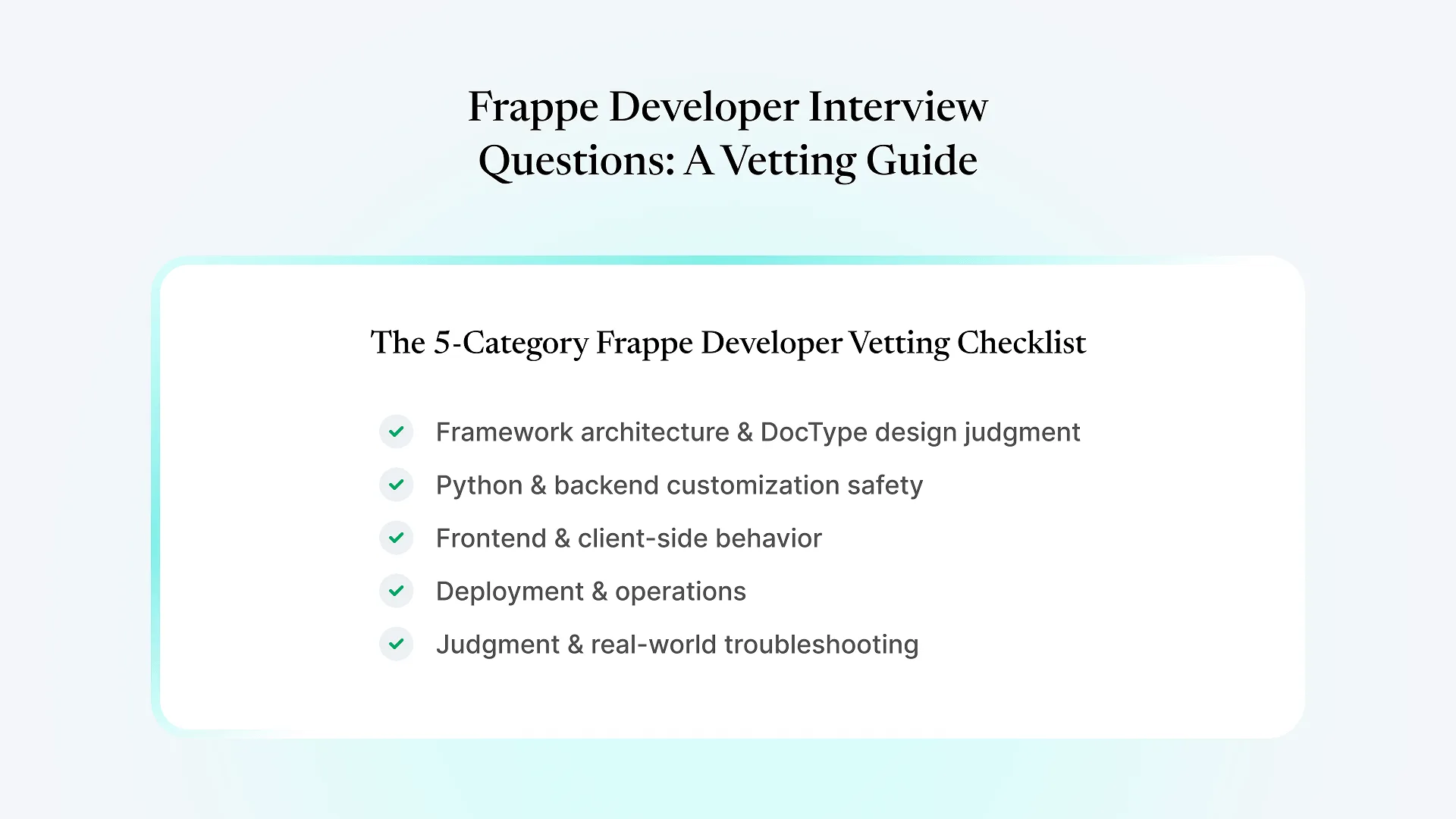
What to actually vet for
Direct experience with Frappe's doctype system and permission model, not just "Python experience"
A working understanding of how customizations are structured to survive ERPNext version upgrades
Familiarity with Frappe's hook system and background job architecture, if the work involves integrations or automation
Evidence of past ERPNext-specific work — a portfolio, GitHub contributions, or references — rather than general ERP claims
For agencies specifically, clarity on who actually writes the code versus who's selling the engagement
Common mistakes
Frequently Asked Questions
If you’ve worked through the framework above and landed on needing outside Frappe capacity — for a single project or on an ongoing basis — see our developer engagement options to look at how that could work.