




Job work management for textile manufacturing is the practice of tracking raw material, fabric, or semi-finished goods once they leave your factory for a sub-contracted process — dyeing, printing, embroidery, stitching, or finishing — and following them until they come back as usable stock. Done well, it means knowing exactly what’s with which job worker, how much has been received, what’s overdue, and what it actually cost. Done on paper or spreadsheets, it usually means none of that.
Most textile and apparel manufacturers in India run at least part of their production through job work. Grey fabric goes out for dyeing. Dyed fabric goes out again for printing or embroidery. Cut panels go to a stitching unit. Each handoff is a point where material can get delayed, partially returned, rejected for quality, or simply lost track of — especially when three or four job workers are running different lots at the same time.
Where Job Work Tracking Actually Breaks Down
The problem isn’t usually that manufacturers don’t know job work is important — it’s that the tools they’re using weren’t built for it. A delivery challan book and a WhatsApp group can tell you material left the factory. They can’t tell you, at a glance, how much of last month’s job work is still pending across five vendors, which lot came back short, or what your effective job work cost per meter was after wastage.
Spreadsheets get closer, but they break down the same way most manual tracking does: someone has to remember to update them, cross-lot errors creep in when quantities are entered by hand, and there’s no link between what was sent, what was consumed, and what should have come back based on your own BOM. By the time a discrepancy shows up, it’s often weeks old.
How ERPNext Handles Subcontracting
Subcontracting Order
formalizes what you're sending a job worker to process and what you expect back, linked to a bill of materials for the subcontracted item.
Stock Entry (material transfer for subcontracting)
moves the raw material or semi-finished goods out of your warehouse and into the job worker's account in the system, so your stock reports reflect reality.
Subcontracting Receipt
records what actually comes back, consumes the transferred raw material against the BOM automatically, and brings the finished or semi-finished item into your stock at the agreed job work rate.
Job Work Management for Textile Manufacturing: What's Different
It's common for one production lot to be split across two or three dyeing units to hit a deadline, each returning at a different time and sometimes a different shade batch. Tracking this by lot number rather than just by item is what keeps quality issues traceable back to the right vendor.
Job workers rarely return a full quantity in one shipment. A setup that can't handle partial Subcontracting Receipts against a single order forces someone to manually reconcile the difference every time — which is exactly the kind of manual step that reintroduces the errors ERP is supposed to remove.
Under Rule 45 of the CGST Rules, inputs sent for job work must be received back (or supplied from the job worker's premises) within one year, and capital goods within three years — beyond that, the movement is treated as a deemed supply and taxed accordingly. Job work movement also needs to be reported in Form ITC-04. A system that generates delivery challans for job work but doesn't tie them to a due-date and reconciliation view leaves this compliance step as a manual, easy-to-miss exercise.
Dyeing, printing, and cutting all carry expected wastage percentages. If your BOM for a subcontracted item doesn't reflect a realistic yield, every Subcontracting Receipt will show a "discrepancy" that isn't actually one — just a badly configured BOM.
| Without structured job work tracking | With job work correctly configured in ERPNext |
|---|---|
| Pending job work quantity known only by asking the vendor or checking a register | Real-time pending quantity per job worker, per lot, from stock reports |
| Job work cost estimated at month-end from vendor bills | Job work rate captured per Subcontracting Receipt, flowing into item cost automatically |
| GST job work due dates tracked manually or not at all | Due dates and ITC-04-relevant movement visible from the Subcontracting Order history |
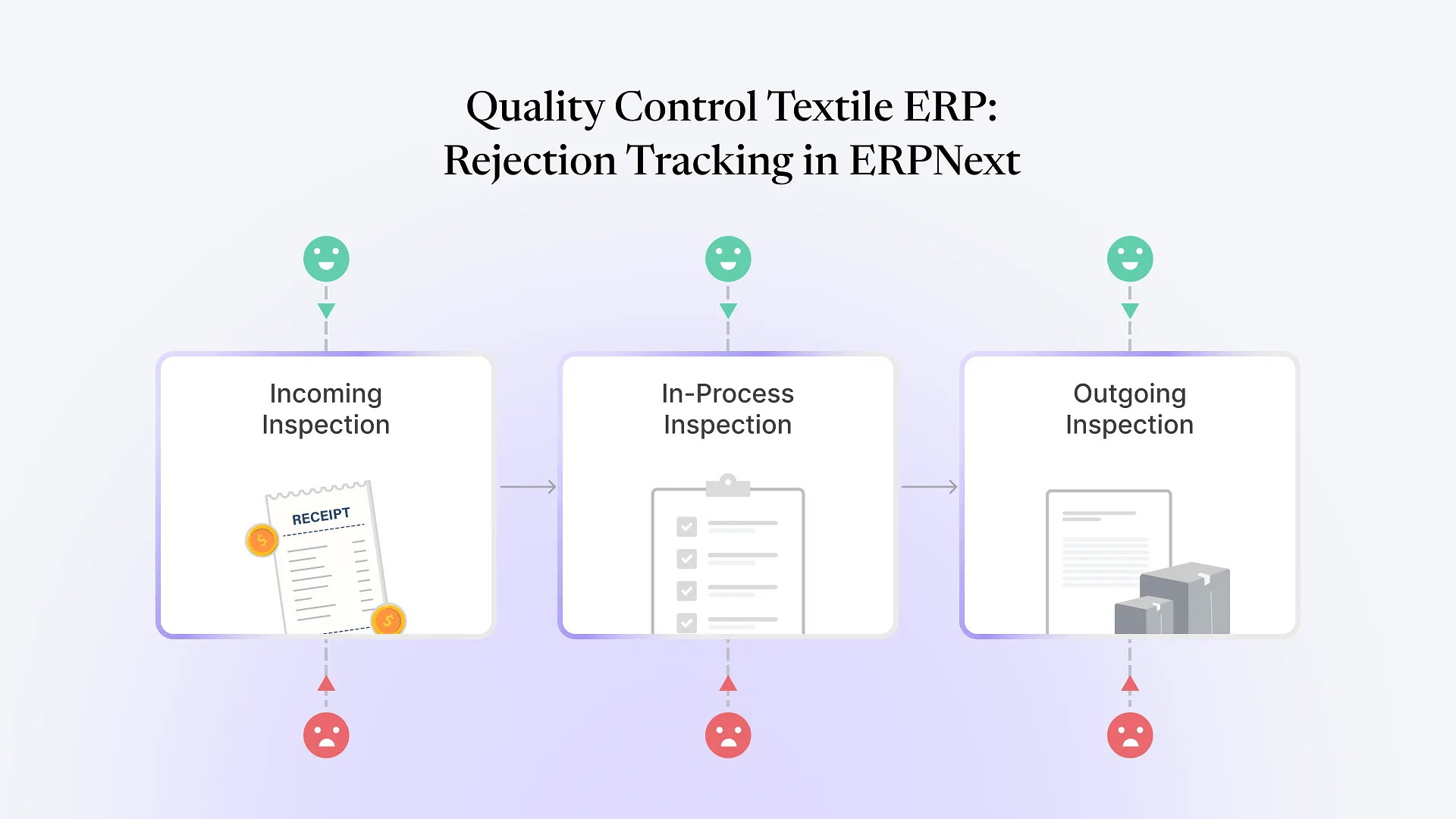
| Quality rejections traced back informally | Rejections linked to the specific lot and job worker via the Subcontracting Receipt |
Common Mistakes That Undermine Job Work Tracking
BOMs built for the finished item, not the subcontracted step
If the BOM used at the Subcontracting Order stage doesn't isolate the specific process (say, dyeing only, not dyeing plus stitching), consumption and yield calculations won't match reality.
No default job worker warehouse per vendor
Without this, stock sent to different job workers gets lumped together, making per-vendor pending quantity impossible to see cleanly.
Job work rates entered as flat estimates rather than per-unit agreed rates
This quietly distorts item costing over time, especially when rates differ by process or fabric type.
Treating rejections as regular stock adjustments
Instead of linking them to the originating Subcontracting Receipt, which breaks the traceability back to the job worker responsible.
Frequently Asked Questions
Getting Job Work Tracking Right From the Start
Job work is rarely a small part of textile production — it’s often the majority of the value-add on a given order. Treating its tracking as an afterthought in an ERP rollout tends to show up later as cost leakage, missed GST deadlines, or vendor disputes that are hard to resolve without a clean paper trail.
Aavatto has set up this exact workflow as part of a full ERPNext implementation for a textile manufacturer managing multi-stage production and supply chain, and the underlying configuration principles — accurate BOMs, per-vendor warehouses, and rate discipline — are the same whether you’re running one job work process or five. If you’re weighing up whether your current system (or a fresh ERPNext rollout) can actually give you this level of visibility, it’s worth a proper look at your specific production flow rather than guessing from a generic checklist. Book a free ERPNext consultation and we’ll walk through where your job work tracking stands today and what a correctly configured setup would look like for your unit.
For a closer look at how this comes together in a real multi-stage textile operation, see our ERPNext implementation case study for textile manufacturing and supply chain management.